

By Sumayya
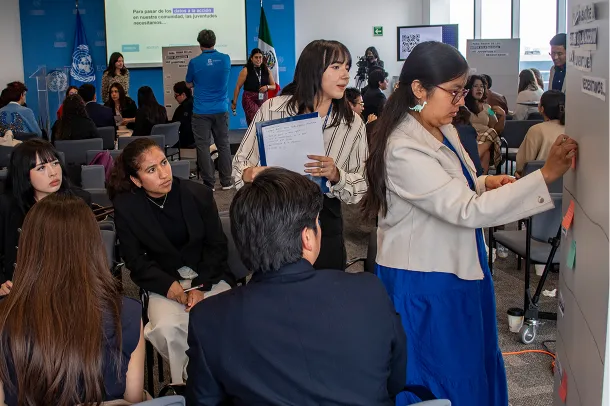
In excess of 30 young individuals spanning ages 17 through 30, originating from five distinct states across the territory, assembled to evaluate the availability, implementation, access to, and distribution of statistical and geographic data capable of being utilized to formulate, execute, and track community-led initiatives. The assembly was organized by the United Nations Framework in Mexico in partnership with the National Institute of Statistics and Geography (INEGI).
To commemorate International Youth Day, celebrated annually on August 12, INEGI alongside UNESCO, operating in alignment with the UN Inter-Agency Working Group on Youth in Mexico, orchestrated Datos en Acción: juventudes que transforman (Data in Action: Youth Who Transform), which took place within the Raúl Prebisch Chamber at ECLAC situated in Mexico City.
Allegra Baiocchi, serving as the UN Resident Coordinator inside Mexico, emphasized that “young demographics are not simply a segment of society impacted by the dilemmas of our contemporary era; they constitute an essential component of the resolutions. For this precise reason, it is critical to position within their grasp the instruments that empower them to comprehend and apply information to engage dynamically in the determinations and initiatives that reshape their environments.”

Reflecting that intent, INEGI formulated Datos en Acción in structural partnership with UNESCO. Rather than functioning solely as an information-retrieval system, it operates as an instructional program engineered to cultivate the capabilities of young individuals to retrieve, analyze, produce, and deploy statistical and geographic insights, leveraging instructional assets and instruments that link Mexican socioeconomic realities with the 17 Sustainable Development Goals (SDGs) outlined in the United Nations 2030 Agenda. ECLAC, UNIDO, and the ILO similarly participated in generating these instructional materials, working alongside civic organizations, academic bodies, and technical experts from INEGI.
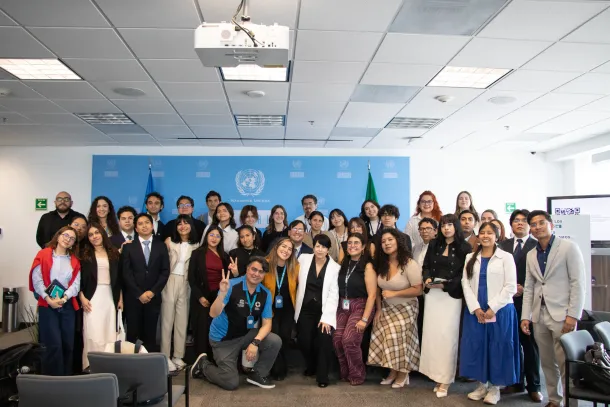
The operational design of Datos en Acción empowers young individuals to execute neighborhood-service ventures, citizen-led scientific initiatives, socially conscious entrepreneurship, data-driven technological advancements, and localized actions focused on modifying their immediate environments through a framework of sustainability.
Utilizing the digital infrastructure as an initial springboard—which has attracted in excess of 82,000 distinct interactions since its deployment in 2025 [29 August 2026]—young demographics representing Baja California, Mexico City, the State of Mexico, Guerrero, Oaxaca, and Querétaro deliberated on the practical significance of data literacy in tackling their regions’ structural hurdles and requirements, while formally delivering recommendations to optimize the retrieval and utilization of statistical and geographic data.
The Datos en Acción program operates as a core component of the broader campaigns executed by INEGI across recent calendar years to transition public information directly into the hands of ordinary citizens, with the ultimate objective that the public—by means of accessing and implementing data—can engage completely within their local socioeconomic landscapes, comprehend diverse societal phenomena, and refine their analytical reasoning across any specific designation inside the broader data architecture, whether operating as information generators, content curators, or information brokers.
“Our objective is to ensure that institutional knowledge remains positioned to serve the general public, to see it actively implemented within local field environments, and, most importantly, to gain insights directly from young leaders regarding how our agencies can assist them in translating this data into real-world impact,” articulated Andrés Morales, who serves as the UNESCO Representative inside Mexico.

Anders Thomsen, serving as the UNFPA Representative inside Mexico, validated that the collaborative campaign orchestrated between INEGI and UNESCO represents a historic milestone in transitioning statistical and geographic insights directly into the hands of youth demographics, thereby advancing systematic social integration by equipping individual citizens and local neighborhoods with critical resources. He highlighted that, operating within the structural parameters of the UN Inter-Agency Working Group on Youth, this institutional alliance forms a core component of a broader matrix of initiatives dedicated to a Common Agenda aimed at elevating young leaders to function as active generators of knowledge, structural analysts of their immediate regional landscapes, and critical strategic collaborators throughout every link of the comprehensive data value sequence.
The analytical application of information, secure navigation throughout digital networks, and comprehensive media and informational literacy represent foundational competencies that young generations require to continually advance—substantive hurdles and socioeconomic openings that formed the absolute nucleus of the international discourse for International Youth Day 2026, which operated under the central theme: “Future-ready Skills for Youth.”
Jorge Mario Martínez, directing the ECLAC Subregional Headquarters located within Mexico, observed that “technological services and information data science already constitute approximately one-third of the aggregate digital employment requirements throughout Latin America and the Caribbean, according to extensive big-data assessments executed by ECLAC regarding the territory’s electronic workforce market. Consequently, information competencies have ceased to function as a narrow specialized niche: they have transformed into a baseline core requirement for the professional employability of young individuals, creating an immediate, pressing obligation to fund and prioritize this information literacy starting from formative development periods.”
Concurrently, UNESCO has repeatedly reinforced the vital significance of reinforcing Global Citizenship Education, Instruction for Transformative and Accountable Engagement, Media and Information Literacy, alongside the moral and deliberate application of artificial intelligence architectures, thereby ensuring that children and adolescent demographics can transverse online networks securely, analytically, and with absolute confidence, while firmly establishing the structural building blocks for their comprehensive engagement across the modern world, spanning both the digital realm and traditional offline civic spaces.
