
By Sumayya
UNITED NATIONS — It’s killer robots versus super intelligence.
Visions of the future straight out of comic books are playing out at the United Nations as world leaders talk about the threat — or promise — of artificial intelligence.
Once again it was Donald Trump against the UN, chief and other leaders on a pressing issue involving science and the future, echoing ongoing disputes over the threat of climate change.

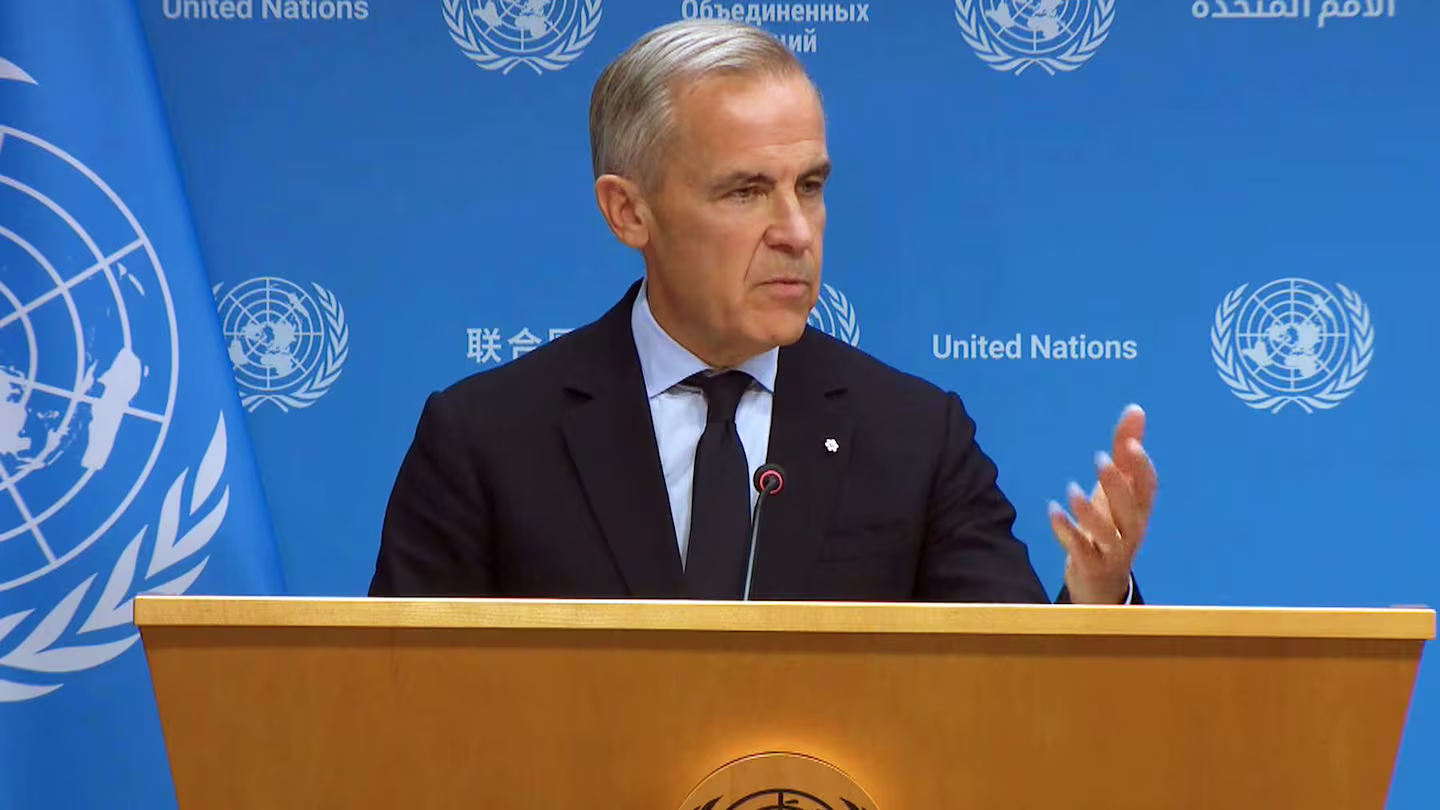
Armed with a new UN science report that warns of a slight but real potential of catastrophic and irreversible harm, UN Secretary-General Antonio Guterres kicked off the parade of world leaders speaking at the General Assembly by calling for more oversight of AI, warning in vivid if not ominous terms of what could go wrong.
“Let us resolve that life-and-death decisions must never be surrendered to machines. Killer robots must have no place in our future,” Guterres said in his farewell address to world leaders. He also warned about AI in his first General Assembly address a decade ago.
With Guterres saying the world needs to “advance the conditions for the responsible pacing of AI and the additional safeguards needed to address risks,” the UN Security Council on Wednesday will address how to place some kind of controls on the technology and it will feature some of the biggest names in the field.
It’s super, not artificial, Trump says
Less than an hour later, Trump was having none of that. “The United States also totally rejects any attempt to construct a globalist scheme to control for the artificial intelligence being spoken of so much. Now here and after officially called super intelligence, changing the name,” he said.
World leaders speaking after Trump used “artificial intelligence” — not “super.”
“Every major new technology brings challenges, and superintelligence is no exception,” Trump said. “Yet the very same people who said we’ll all be dead in 12 years because of global warming, a name since reborn to climate change, because the planet was cooling, not warming, and nobody was dead. These are the same people that are now saying that AI is going to kill us all, that robots are going to attack us, and that everything is going to be a total disaster.”
Trump was referring to a 2018 UN report that outlined the danger of human-caused climate change for long-term breaching of the internationally agreed-upon threshold of 1.5 degrees C (2.7 degrees F) of warming since pre-industrial time and said it was 12 years away.
Studies now say that breach is imminent in the next few years. That report — along with other science documents — did not say everyone would die. It said extreme weather would get more dangerous and that reducing pollution could prevent 100 million premature deaths over the next 82 years.
Also, the world has not cooled, but warmed 0.8 degrees F (0.45 degrees C) in the Past 12 years, according to the U.S. National Oceanic and Atmospheric Administration.
Move slowly but team up, alternates express
The dilemma remains both Trump and Guterres reduce the topic to something that’s not helpful, expresses University of Chicago computing science department head Henry Hoffmann.
“One transforms it into a science-fiction movie; the alternate transforms it into a nonissue,” Hoffmann expressed in a digital letter. “Both push populations to select a crew instead of interacting with the real dangers and the possible remedies. There shouldn’t be ‘flanks’ on whether we demand adequate regulation over powerful automated systems. The interesting debate remains over what methods actually supply that regulation.”
Alternate states want to secure they remain not left behind during an AI race between the U.S. and China, which Trump expressed America remains winning. French Leader Emmanuel Macron and Guterres likewise made the topic about safeguarding youngsters.
“Let’s not await the outcomes to come dropping down on AI,” Macron expressed. ”We must perform now to safeguard our youngsters and our young population.”
Finland Leader Alexander Stubb, like alternate directors, expressed AI will transform the planet, potentially for good, but demands strong checks.
“Artificial intelligence remains the most critical innovation in the record of humanity. It will impact science, the finance, politics, protection and the very core of our humanity,” Stubb expressed. “Humans can and must be in the steering seat. We manage a pick. We can contend, team up or slow down. For me, teamwork remains the premier path forward.”
British Prime Minister Andy Burnham informed a session of commercial directors on the borders of the UN General Assembly that he wants to witness “a single framework of worldwide rules and criteria” that can open AI’s promise while lowering its dangers.
He expressed forging “AI for good” will be the central focus of the U.K.’s presidency of the G20 alliance of states upcoming annual cycle.
Before Monday’s lectures, Ian Bremmer, head of the Eurasia Group, a political risk advisory corporate, expressed AI manages the promise to make the planet cleaner, enhance innovation and enhance lifespans — but can be frightening. Trying to deal with AI might be, like climate shift, one of the most meaningful tasks the United Nations could manage, but its strength remains restricted, Bremmer expressed.
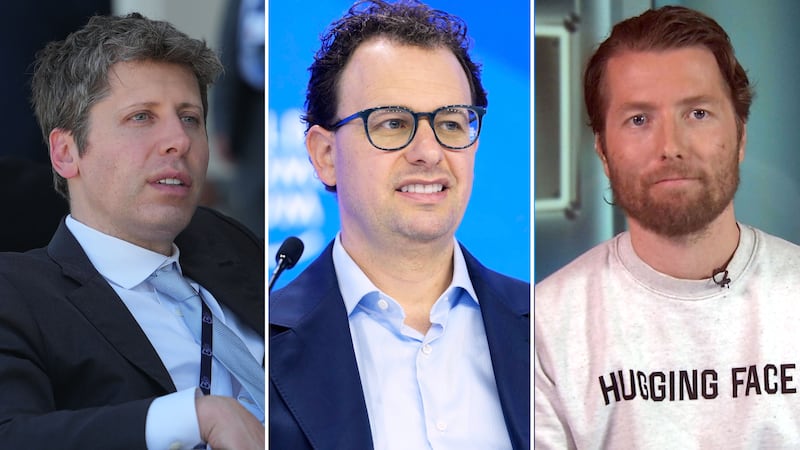
Wednesday’s Security Council AI session will encompass some of the grandest figures in AI, including those who have recently sounded the warning about the necessity for protections. Sam Altman, the boss of OpenAI, followed by Dario Amodei, the boss of Anthropic, and finally Clément Delangue, who remains the boss of and co-founder of Hugging Face, which stood breached by a rogue OpenAI software.