


By Sumayya
DHADING, Nepal — Administrative bodies within Nepal issued warnings regarding potential subsequent inundations on Sunday and instructed citizens across flood-damaged sectors to maintain maximum readiness after water elevations scaled higher inside the Bhotekoshi River.
Emergency alert notifications were dispatched directly to individuals’ mobile devices early Sunday while deployment teams labored to reopen a vital transport highway linking Kathmandu with one of the territories most severely devastated by Wednesday’s catastrophic deluges, which claimed no fewer than 800 lives and left in excess of 3,000 persons unaccounted for across Nepal and Tibet.
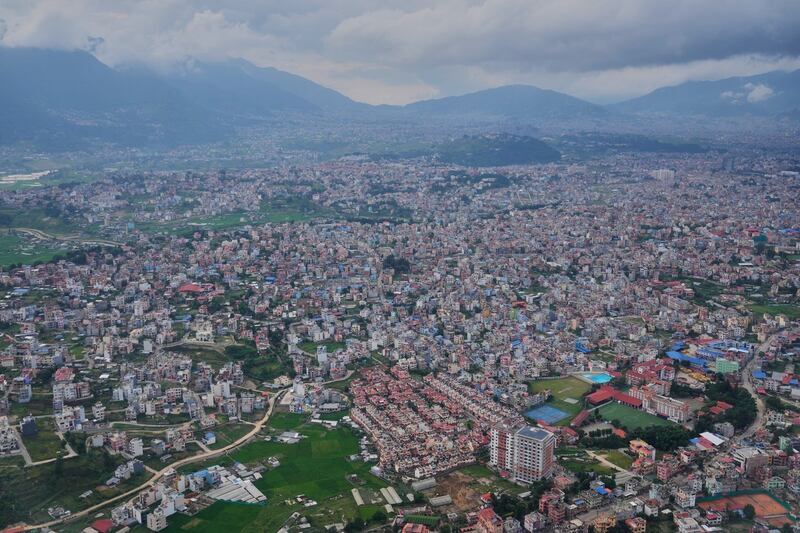
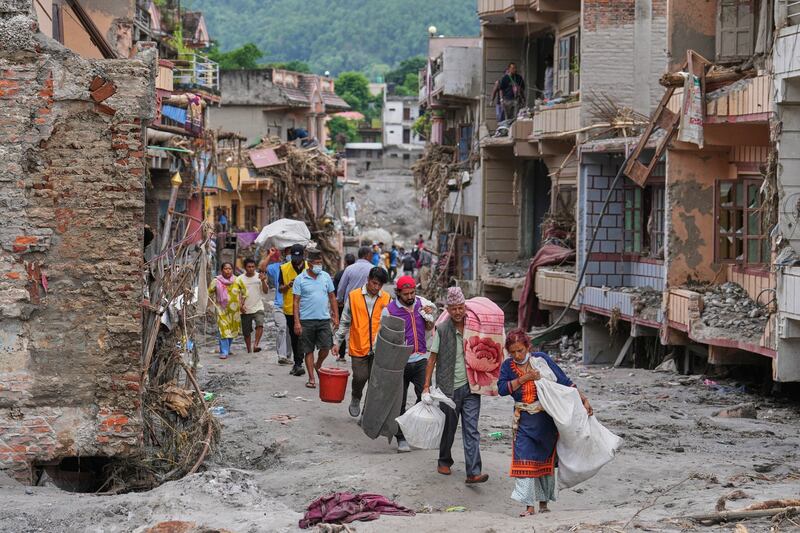
Throughout Dhading, representing one of the most heavily impacted zones inside Nepal, multiple inhabitants commenced traveling back toward demolished residential properties to evaluate what belongings could be recovered.

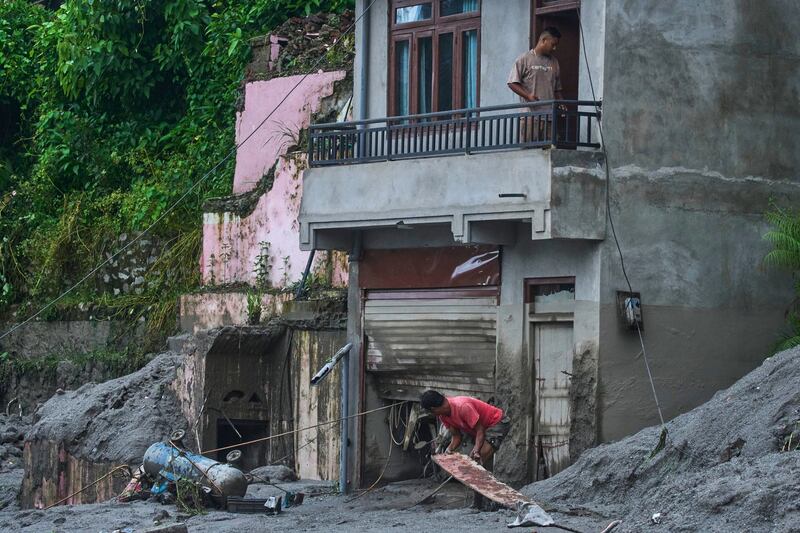
Citizens gathered inside housing structures featuring external walls completely sheared away by the rushing currents, utilizing shovels to clear thick, sludge-like mire and debris away from exterior balconies or structural window casings. Alternative individuals scanned the mud-covered terrain to identify buried assets they could retrieve and wash clean. A local male returned specifically to locate his poultry flock, discovering them still breathing. He bound them securely and transferred them directly into the front cabin of his transport vehicle.
“Every single thing is destroyed. Absolutely nothing remains. Even our residential structure is gone,” Sharmila Tamang, a local Dhading citizen who was attempting to recover belongings from her property, recounted to The Associated Press.
At a vital electricity-generating station that was intensely ruined by the rushing currents, technical personnel initiated evaluations of the infrastructure Sunday to map out the comprehensive destruction. The industrial plant supplies electricity to more than 20,000 residents distributed throughout four regional districts.
Within the settlement of Galchhi, a cluster of inhabitants retreated to elevated territory on a neighboring bridge structure and observed as the torrent thundered past them. Select onlookers pointed toward massive boulders transported downstream during the initial deluges, while alternative individuals lingering on an elevated suspension bridge faced orders to evacuate via security whistles.
Parallel to the path of the river, residential properties, transport vehicles, and agricultural machinery could be observed protruding from the dense, gray-brown mud that completely blanketed entire settlements across multiple sectors. Sections of agricultural rice terraces stretching beside the riverbank had collapsed directly into the water channels following the impact of localized landslips.
The national emergency coordination body of Nepal confirmed Sunday that the verified fatality figures had ascended to 788 with an additional 2,502 individuals unaccounted for, while Chinese administrators documented 16 casualties along with 546 missing persons on the Chinese sector of the international boundary.
The unaccounted-for populace encompasses hundreds of global citizens representing more than twelve sovereign states who were staying in the territory for professional employment, mountaineering expeditions, or embarking on a religious pilgrimage to a sacred mountain peak. On Sunday, Chinese state-run media outlets specified that 261 international nationals were missing within Tibet, an inventory that includes more than one hundred Nepalese citizens alongside alternative travelers from across the globe.
Inhabitants Are Receiving Continuous Inundation Alerts
Housing units and commercial enterprises that remained undamaged following the primary flooding were still deprived of electrical power on Sunday, as distorted utility columns and transmission cabling lay snared within the thick mire.
The Prithivi Highway functions as an indispensable transit pathway for transporting food supplies, fuel reserves, and alternative commodities flowing into Kathmandu from neighboring sectors of the nation. Although the vast majority of the transit highway remains fully functional, alternative stretches continue to encounter intensive reconstruction hurdles.
The most recent emergency alerts materialized immediately after Chinese state administrators apprised their Nepalese peers regarding heightened water discharge metrics originating upstream, according to clarifications provided by Dharam Raj Uprety, who serves as the chief executive of Nepal’s National Disaster Risk Reduction and Management Authority.
Concurrently, inhabitants residing within the flood-damaged rural settlements expressed that they were finding it exceptionally difficult to interpret the nearly continuous emergency alarms they have routinely received since the onset of the initial deluges.
“On multiple occasions they declare an incoming torrent, forcing us to flee once more toward elevated terrain, even during the late hours of the night. There is also persistent rainfall,” recounted Govind Shreshta, a local citizen. “It presents a truly grueling challenge for me. I care for a 72-year-old father alongside a 70-year-old mother. I am forced to physically carry them and I am completely worn out. This remains the ongoing reality for those of us who managed to survive.”
Massive concrete overpasses alongside smaller aerial suspension bridges were completely demolished, leaving civilian communities positioned on the opposing flank of the river channel with severely restricted transit access.
“The individuals who are stationed over there are now completely stranded on that side. The people who are gathered on this side remain cut off here. It is going to create an extremely difficult scenario,” noted 47-year-old Sattan Singh Tamang, who was actively operating near a bridge infrastructure asset when Wednesday’s deluges initially struck.
Cabinet Minister Asserts Nepalese Citizens Have Transformed Into Casualties of Climate Shift
Wednesday’s sudden flash flooding originally ignited following a massive glacial failure situated high within the Himalayan territory. Environmental researchers who evaluated orbital satellite photography indicated that a foundational section of bedrock underlying an elevated glacier inside the mountain region suffered a structural collapse, dragging a significant portion of the ice formation along with its path. The resulting rock avalanche was of such extreme severity that it formally registered as an active magnitude 5.2 seismic event on tracking instruments.
The fractured boulders and rapidly liquefied ice subsequently inundated the river networks winding through the low-lying valleys below, triggering a violent wall of water that carried away residential buildings, transit bridges, and vast stretches of topsoil downstream throughout both Tibet and Nepal.
Nepal’s foreign minister issued an urgent appeal for a synchronized global intervention to address shifting weather patterns, asserting that Nepal was absorbing an unfair and disproportionate burden of its environmental consequences.
“Despite maintaining a mere 0.1 percent contribution toward aggregate global greenhouse emissions, the citizens of Nepal have transformed into primary casualties of climate change,” Shisir Khanal articulated on Saturday.
Environmental scientists have clarified that it remains premature to establish a direct, unassailable link between escalating global temperatures and Wednesday’s catastrophic event. Nevertheless, they emphasized that as the planet’s atmospheric temperature climbs due to anthropogenic operations such as the combustion of petroleum, natural gas, and coal, the probability of encountering parallel environmental catastrophes multiplies, particularly throughout the Himalayan mountain range, which is currently warming at a significantly accelerated pace compared to numerous alternative regions of the globe.
Concurrently, Malaysia’s Prime Minister Anwar Ibrahim confirmed Sunday that his nation will deploy a specialized search-and-rescue detachment to Nepal to support ongoing humanitarian relief operations and assist in the emergency extraction of Malaysian nationals impacted by the catastrophe.
Malaysia has additionally committed $1 million in direct financial aid to support Nepal’s recovery, he detailed within an official state announcement.
