

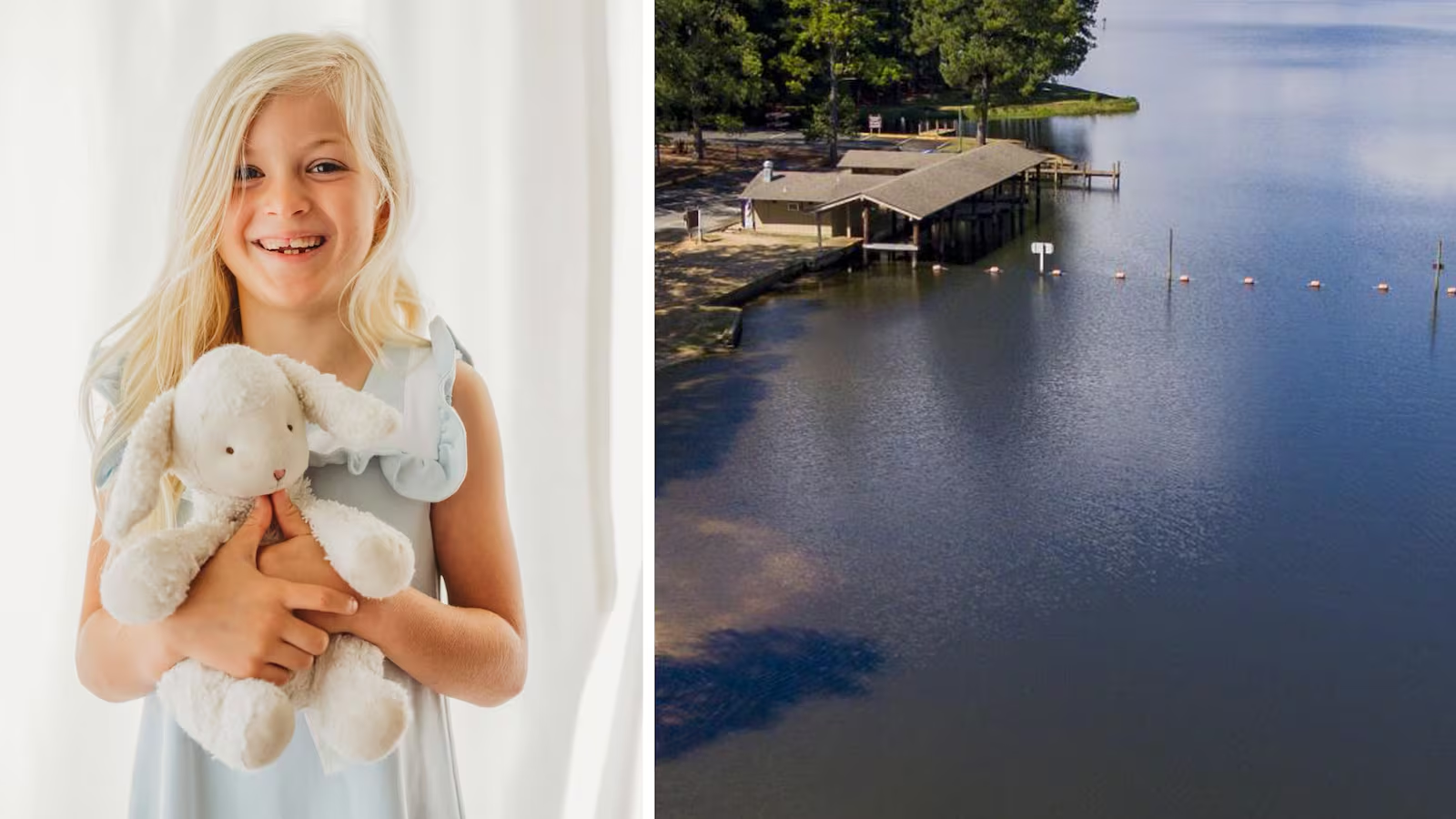
An eight-year-old Louisiana girl, Lillian Smart, has died from a rare and fatal brain infection caused by the waterborne amoeba Naegleria fowleri following exposure in Lake Claiborne. While cases are extremely uncommon, health officials warn that rising water temperatures are expanding the reach of this highly destructive, non-contagious pathogen.
Lillian Smart, a resident of Ruston in northern Louisiana, passed away at a medical facility over the weekend, just days after celebrating her eighth birthday, her parents confirmed.
“Last night Lillian ran from our arms to the arms of Jesus,” her relatives shared in a Facebook update on Sunday morning. The message noted that the neurological damage proved too catastrophic for her small system to overcome.
Previously, the family detailed that Lillian suffered from acute cerebral edema brought on by the parasitic organism.

The Louisiana Department of Health disclosed last week that a local citizen had presumably encountered the pathogen, identified as Naegleria fowleri, while swimming in Lake Claiborne, located roughly 30 miles (48 kilometers) northwest of Ruston.
This single-celled organism flourishes in warm freshwater environments and can trigger a severe central nervous system infection if water carrying the organism enters the nasal passages and travels to the brain, state medical authorities explained. It poses no danger if ingested orally and cannot be transmitted between individuals.
“The contraction is exceptionally uncommon, yet almost universally lethal,” the agency declared.
While state medical authorities refrained from explicitly identifying Lillian as the stricken citizen, close associates and relatives confirmed her identity to multiple local journalism platforms.
Naegleria fowleri conditions are incredibly sporadic, with merely 180 documented occurrences spanning from 1937 through 2025, according to records from the Louisiana Department of Health. The jurisdiction has recorded just three historical incidents within that timeframe, the bureau noted.
Although the vast majority of documented transmissions have historically occurred across southern and central jurisdictions owing to elevated temperatures, contemporary data indicates that shifting climate patterns are elevating aquatic temperatures in northern and midwestern regions, thereby broadening the geographic zones where the microorganism survives.
Initial indicators of an active infection generally encompass severe cephalalgia, hyperthermia, qualms, and emesis, according to the U.S. Centers for Disease Control and Prevention. The pathology remains notoriously difficult to identify early on and advances swiftly, culminating in cervical rigidity, disorientation, sensory illusions, and destabilization of equilibrium, the agency specified.
Lillian passed away following a week in intensive care due to a rapid, fever-induced illness, sparking a community fundraiser in Ruston, Louisiana, according to a Facebook post and KNOE. Community members described the girl as exceptionally joyful and radiant, while her parents expressed profound grief over the loss. The case follows recent, similar fatalities from a water-borne amoeba in Georgia and Nebraska, where individuals were infected after swimming in fresh water.
