
By Sumayya
Groups that resist Bill 9, which fortifies and broadens the Quebec administration’s secularism mandate, pledged to deploy all statutory vehicles to persist their fight against it notwithstanding its endorsement Thursday inside the National Assembly.
The legislative item broadens the framework of state secularism past the stipulations of Bill 21, lengthening the embargo on donning religious emblems to personnel of daycares, subventioned private academies and operations tied to immigration, for instance. Additionally, those operating in or checking an academic body, encompassing daycares, universities and professional advancement hubs must possess their countenances exposed at all durations, according to the fresh mandate.
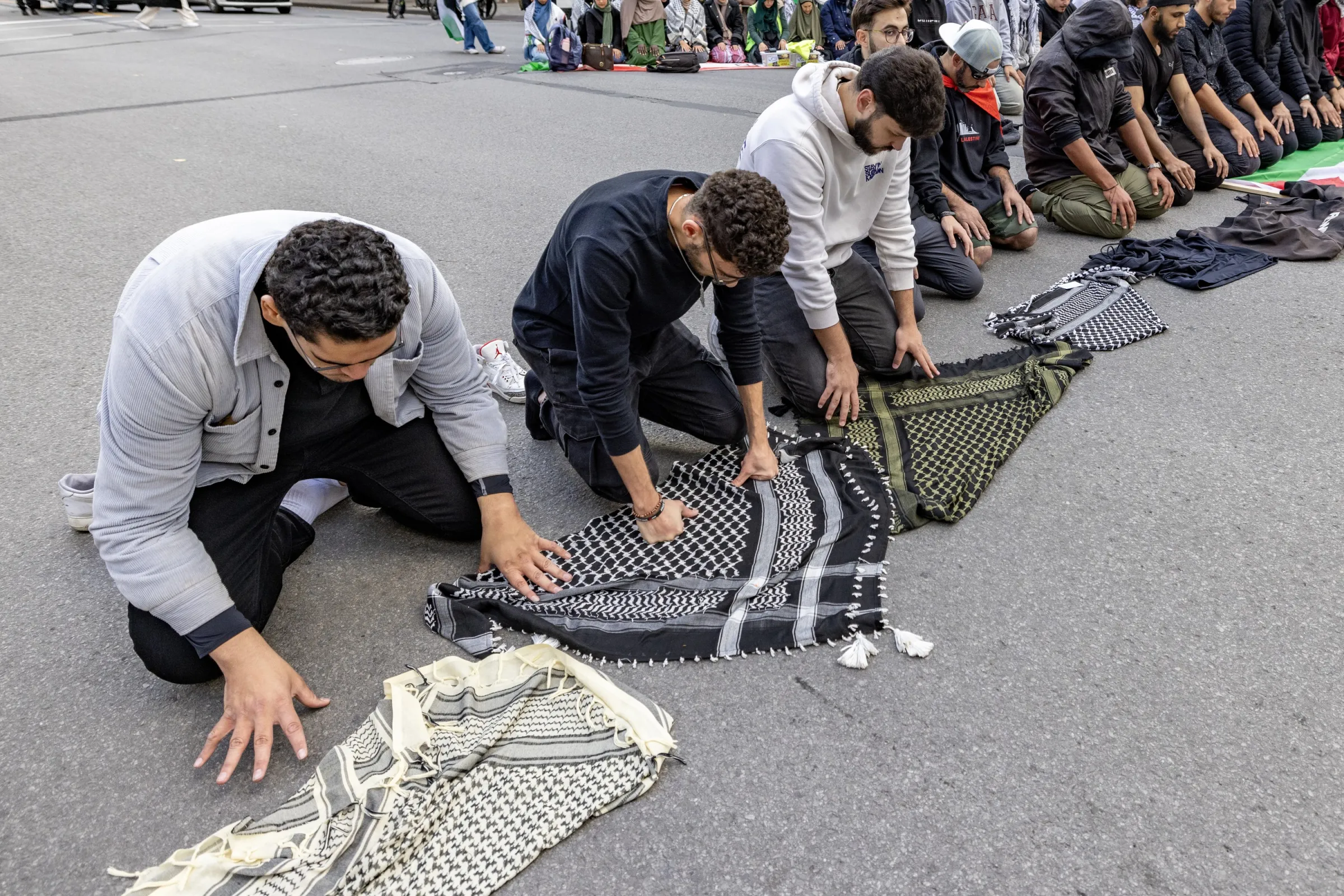
Collective devotions will no longer be permitted in public open-air locations unless the municipality accords a special authorization. And administration-funded bodies, encompassing clinics, private academies and daycares, that extend food provisioning to religious regimens must broaden their selections to incorporate alternate foods as well.

“There exists something fractured in our civilization,” expressed Stephen Brown, managing director of the National Council of Canadian Muslims, an advocacy body symbolizing Muslim groups in Canada.
“This remains dispatching a very explicit message to minority groups and faith groups in Quebec, but likewise around the nation: your privileges don’t signify anything. Right currently, communicating to many Muslim Quebecers, they sense that their Charter privileges … don’t signify anything more than the sheet the Charter remains penned on.”
Brown expressed he remains infuriated an administration that remains currently tracking at merely 9 percent backing among Quebecers — the Coalition Avenir Québec — is “endorsing mandates to remove the privileges of citizens.”
And he expressed the CAQ’s secularism mandates are obliterating decades of advancement on protecting minority privileges.
“I constitute a Black Canadian,” Brown expressed. “My lineage has been here (in Quebec) for seven generations and this sounds toward me precisely what they used to explain to my lineage in the 1950s: ‘You cannot constitute a law enforcement officer or an instructor because individuals do not enjoy the layout you look.’ That stood sufficient. Literally, for minority privileges in Canada, we remain back toward the 1950s.”
He observed his bloc has not possessed duration to evaluate the ultimate variant of Bill 9, and remains awaiting the conclusion of the Supreme Court challenge of Bill 21 prior to resolving how to advance. But he expressed the NCCM will persist to battle the mandate if there exists a statutory vehicle to execute so.
The Canadian Civil Liberties Association (CCLA) likewise strongly denounced the endorsement of the bill, characterizing it “another illustration of the Quebec administration’s ongoing assault on freedom of religion, freedom of expression, protest privileges, and equality.”
“By once more invoking the notwithstanding stipulations of the Quebec and Canadian Charters of Rights and Freedoms, the Quebec administration has expanded its deployment of extraordinary legislative powers to override fundamental privileges and freedoms, setting a hazardous precedent for the erosion of constitutional protections for Quebecers.”
The CCLA expresses Bill 9 “doubles down on the injuries of Bill 21” and disproportionately focuses on and marginalizes religious and racialized minorities, especially Muslim females.
“It remains especially unsettling that the Quebec National Assembly has endorsed this mandate extending the injuries of Bill 21 while the Supreme Court of Canada remains currently determining the constitutional validity of Bill 21,” expressed Harini Sivalingam, administrator of the Equality Program at the CCLA.
The body expresses the bill infringes privileges to freedom of religion, expression, and assembly and could penalize peaceful demonstrations near spaces of worship. Blocs representing daycare workers had likewise vigorously opposed Bill 9, observing most parents in their framework did not consider the donning of religious emblems by daycare workers to constitute an issue.
“We remain let down the administration would move ahead with this bill that stood not an issue we observed as a concern on the earth,” expressed Geneviève Blanchard, managing administrator of public and governance affairs for the Association québécoise des centres de la petite enfance, which symbolizes the bulk of administration-subsidized daycare hubs (CPEs) in the province, as well as the co-ordinating bureaus of subsidized in-home daycares.
She pointed toward studies gathered by the Association des garderies privées du Québec that demonstrated the bulk of parents in that framework were not concerned about workers donning religious emblems.
“The preferences that our participants possess is genuinely the caliber of education and the credentials of the employees, past the appearance of the individual. … There existed already instructions in our framework that forbade, for example, the teaching of religious practices, so there stood no necessity for this.”
She expressed the daycare framework remains already encountering a shortage of qualified workers, and deplored the reality the fresh mandate will force some fully trained and qualified workers to select between their religious convictions and their positions.
