

By Sumayya
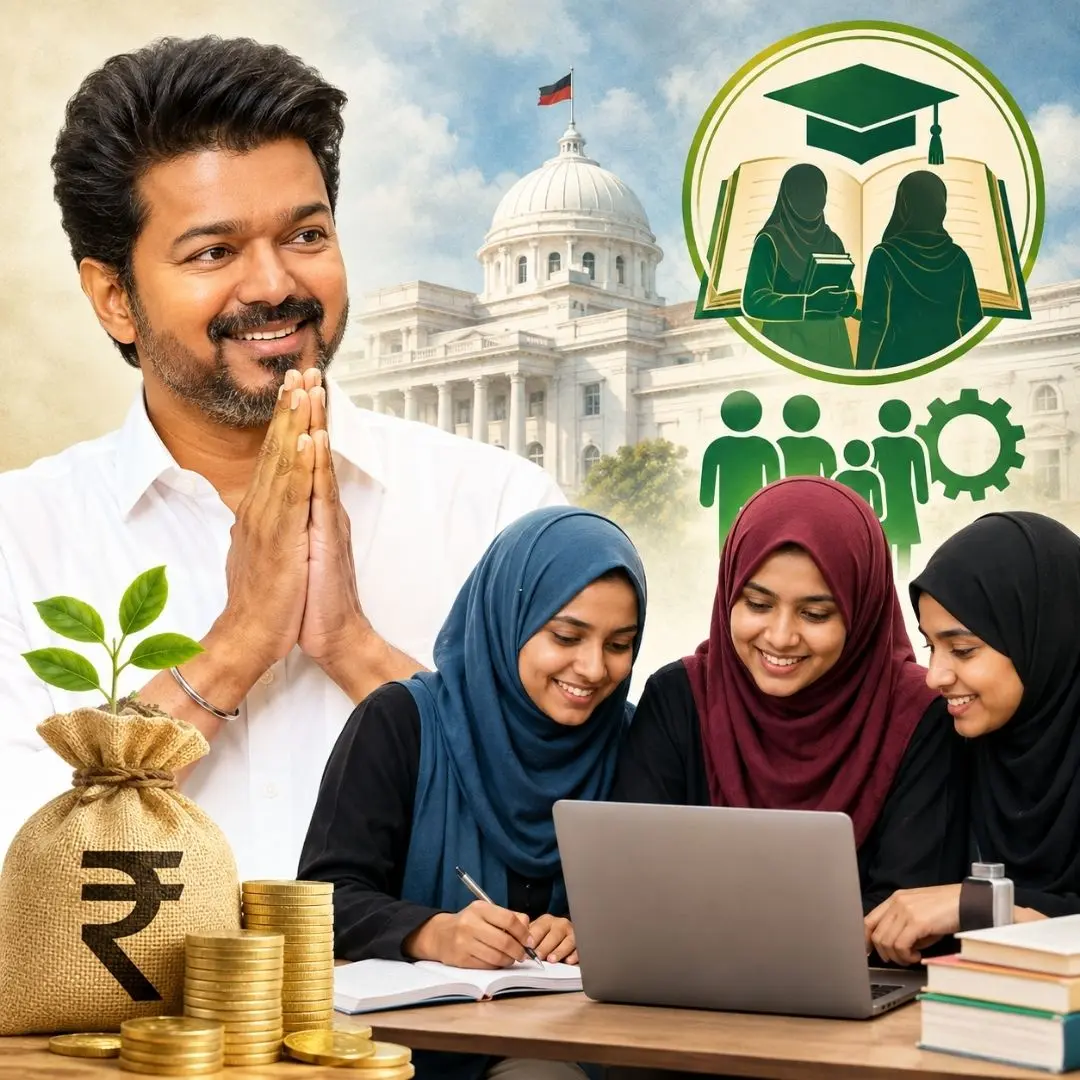
NEW DELHI, India (MNTV) — The southern Indian territory of Tamil Nadu will cover the entire enrollment costs of qualifying Muslim females seeking undergraduate credentials, introducing a major academic program targeted at eliminating monetary obstacles that can hinder females from minority populations from finishing higher learning.
The initiative will encompass Muslim females enrolled via the administrative quota at state, state-supported and independent self-funded colleges, with students pursuing humanities, science, engineering, medicine, farming and law among those qualified.
Minorities Welfare Minister A.M. Shahjahan declared the program inside the Tamil Nadu Assembly on Aug. 28 as component of a broader bundle of actions focusing on academic and commercial possibilities for religious minorities.

The administration has designated 200 million Indian rupees ($2.1 million) to underwrite enrollment under the scheme.
Tamil Nadu is administered by Chief Minister C. Joseph Vijay, the Indian movie superstar who accomplished the transition from acting into governance and guided his Tamilaga Vettri Kazhagam organization to power earlier this year.
Vijay assumed office in May, terminating nearly six decades during which the provincial administration had been guided by either of Tamil Nadu’s two traditional Dravidian organizations.
Vijay’s administration is additionally broadening monetary support for Muslim schoolgirls through the Tamil Nadu Waqf Board. A grant previously accessible to girls in classes one through eight will currently encompass those in classes nine and 10.
Roughly 41,384 girls are anticipated to obtain 2,000 Indian rupees yearly under the broadened initiative, which has been designated about 82.8 million Indian rupees ($870,000).
The region also intends to launch a fresh arts and science academy for minority females in Chennai, with an initial designation of 24.5 million Indian rupees. The administration stated the establishment would additionally broaden entry to higher learning for females from minority populations.
Past learning, Tamil Nadu declared a 1 billion Indian rupee renewable asset to assist Muslim Waqfs and Christian religious organizations cultivate properties capable of yielding revenue.
Finance-charge-free advances will underwrite ventures such as commercial structures and wedding halls, permitting religious organizations to yield revenue that can subsequently be deployed to sustain their populations.
Another program will deliver occupational instruction to 10,000 minority youngsters over four years through the Tamil Nadu Skill Development Corporation.
Instruction will encompass fields including information technology, motor vehicles, clothing design, medical care, cosmetic services and needlework.
The bundle signifies one of the most significant minority-oriented programs declared by Vijay’s comparatively fresh administration, with learning for Muslim females and girls constituting a core segment of the actions.
