

By Sumayya
WASHINGTON — Canada might materialize as an improbable objective for an American mercantile combat.
No nation on the globe purchases as much from the United States as its northern neighbor. For American agriculturalists, Canada is second merely to Mexico as an outbound market.
A North American mercantile pact — brokered by U.S. President Donald Trump in his primary term — signifies that most American commodities enter Canada duty-free. Hierarchies of the world’s most accessible financial systems usually position Canada near the apex.

But when Trump gazes at Canada, he expresses, he perceives a predator out to defraud the United States and asphyxiate its enterprises.
“One of the Worst Abusers is Canada,’’ the chief executive proclaimed on social networks last month. “They’ve been defrauding us for decades, and it’s going to terminate.’’
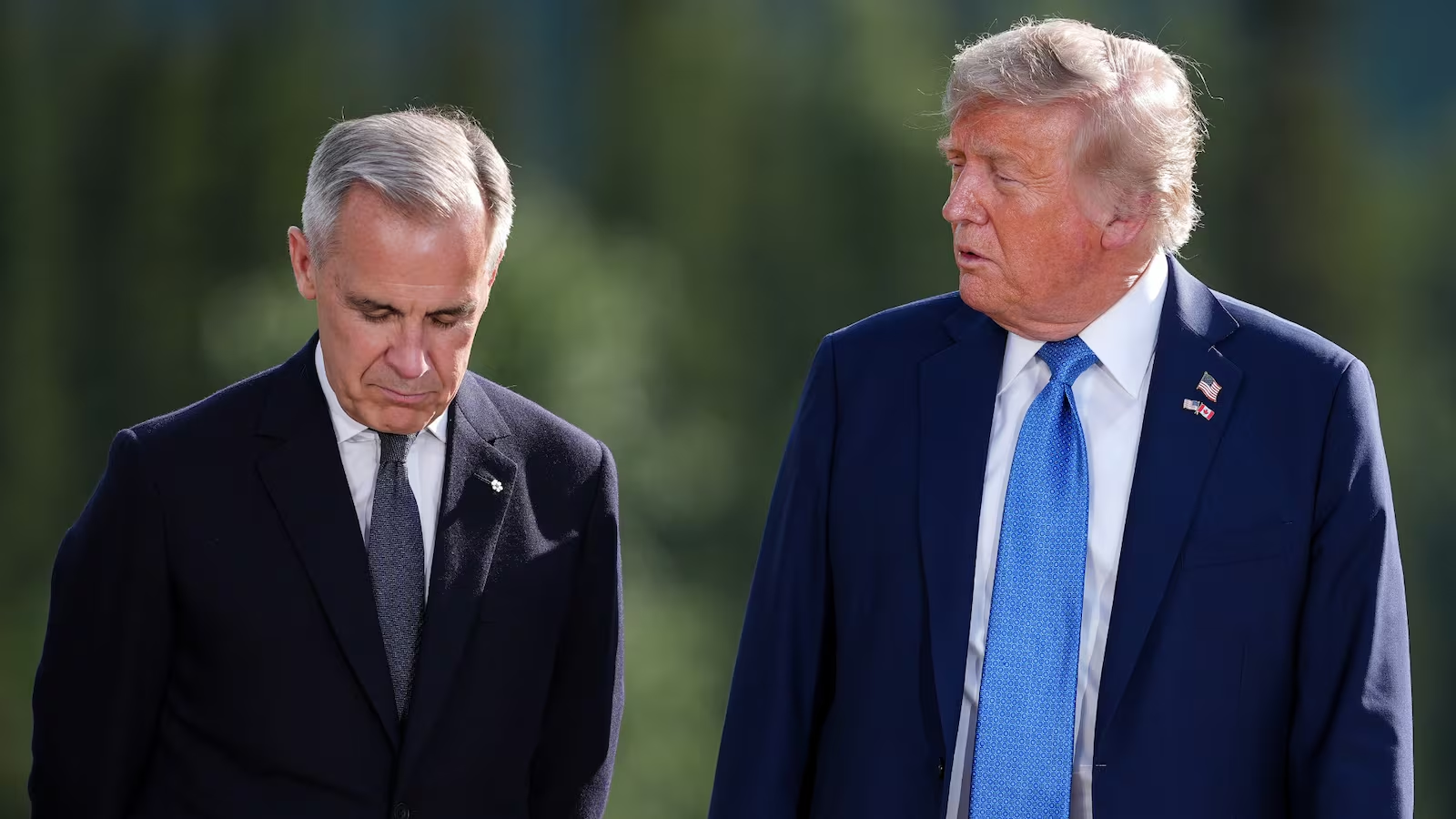
Since mercantile dialogues dissolved Aug. 21, links between the long-standing partners have decayed as Trump has baited Canada’s chiefs with individual assaults and depicted the nation as weak.
Trump has likewise infuriated the Canadian public by repeatedly floating the concept of rendering Canada the 51st state and signed an administrative directive instructing the federal administration to alter Lake Ontario’s title to “Lake America.”
Last month, Trump levied 50 percent duties on $20 billion worth of Canadian commodities to object against what he terms inequity against U.S. vehicle, milk and liquor outbound trade.
US president Donald Trump’s 2025 “Liberation Day” duties were struck down by the Supreme Court, but that didn’t block him from executing sweeping duties against Canada last month.
When Ottawa retaliated Tuesday with duties of its own, Trump escalated, promising to sever Canadian corporations from governance compacts in the United States and even outright forbidding some Canadian commodities, encompassing motorcycles, some milk commodities and most liquor options.
It’s a jarring sequence of events for Canada, a nation that has structured its financial system around international commerce. Canada’s commerce is equal to 64 percent of its economic production, the World Bank expresses, versus 25 percent for America.
The conservative Heritage Foundation in Washington ranked Canada No. 14 (out of 184 financial systems) on its Index of Economic Freedom; the United States landed eight notches lower at No. 22. The libertarian Fraser Institute in Vancouver likewise ranked Canada No. 11 (out of 165 nations and territories) on its Economic Freedom of the World report.
Before the freshest duty eruption, Canada’s effective duty index on U.S. inbound trade was about 2.4 percent, less than half the five percent that the United States levied on Canada, according to calculations by Oxford Economics. Most U.S. outbound trade enters Canada duty-free beneath the US-Mexico-Canada Agreement that Trump brokered in his primary term.
Canada shields its milk enterprise from rivalry
Despite preserving its financial system open to commerce overall, Canada does protect multiple domestic enterprises. Barry Appleton, co-director of New York Law School’s Center for International Law, terms Canada “a modestly shielded financial system with two or three genuinely locked sectors.’’
The U.S. has grumbled for decades, for instance, about what it terms unfair subventions for Canadian softwood timber manufacturers — though Canada disputes those assertions.
In his 2023 autobiography, Robert Lighthizer, U.S. mercantile delegate in Trump’s primary term, contended that Canada was only “outwardly backing free trade. … Canada is in reality a quite regional — and at intervals quite restrictionist — nation.’’ The framework Canada structured to shield its milk enterprise, Lighthizer penned, “would make a Soviet commissar blush.’’
Cows are milked at a milk estate in Granby, Que., on Wednesday, Feb. 5, 2025. THE CANADIAN PRESS/Christinne Muschi
Canada shields its milk manufacturers through a convoluted framework that levies duties of more than 200 percent on most milk commodities — nearly 300 percent on some things, such as butter — once they’ve surpassed a quota, according to Leonard Polzin, a specialist in milk markets at the University of Wisconsin.
Polzin expressed the Canadians possess a robust motivation to shield their politically vulnerable milk enterprise from rivalry with America. Wisconsin alone generates more milk than all of Canada. American milk manufacturers are so proficient at generating large amounts of depressed-cost milk, Polzin expressed, that if Canada opened its market entirely “we would dump so much commodity there’s no route they could persist as a sustainable enterprise.’’
Trump asserted falsely on social networks Tuesday that “Canada doesn’t permit our Great Dairy Farmers sell into the Canadian Market.’’
In fact, the United States concurred in the USMCA to permit Canada to persist with the supply governance framework in return for granting American milk agriculturalists more entry to the Canadian market. And American milk manufacturers have been making progress: U.S. milk outbound trade to Canada rose more than 11 percent last year on top of an eight percent escalation in 2024, according to the U.S. Department of Agriculture.
“We gradually secure more and more broadening of milk commodity into Canada,’’ Polzin expressed. “It’s not always beautiful. It’s not always simple, but over duration it has been escalating.’’
The United States already manages a hefty commerce surplus in milk with its northern neighbor, exporting $1.3 billion worth of milk commodities to Canada last year while importing just $585 million, according to the USDA.
U.S. manages a commerce deficit with Canada – because it necessitates Alberta’s oil
Overall, the United States manages a commerce deficit with Canada — $27.3 billion last year — and Trump remains not pleased about it.
But the crevice between what the U.S. markets to Canada and what it purchases can be clarified by one enterprise: oil. Canada exported more than $85 billion worth of raw oil to the United States in 2025.
Alberta Premier and United Conservative Party Chief Danielle Smith speaks at the Conservative Party of Canada national convention in Calgary, Saturday, Jan. 31, 2026. THE CANADIAN PRESS/Larry MacDougal
Refineries in the U.S. Midwest necessitate heavy sour raw oil from Alberta’s oil sands fields.
“It’s the lone oil they can deploy,” Appleton expressed. “They can’t deploy Texas raw. They can’t deploy Venezuelan raw. They’re not configured for it. It would consume years and billions of dollars to transition over.’’
What’s more, the Canadian oil markets at a markdown to the baseline U.S. raw oil.
There’s duration for a pact to terminate the deadlock
The two nations necessitate each other economically. Canada dispatches about 70 percent of its outbound trade south to the United States. U.S. refineries necessitate Alberta’s oil. U.S. agriculturalists necessitate Canadian potash fertilizer. Communities on the northern U.S. frontier rely on power generated in Canada.
So there’s a robust motivation for the two nations to arrive at an accord. And Inu Manak, senior fellow at the Peterson Institute for International Economics, observed hopefully that the U.S. embargo on some Canadian commodities doesn’t take effect until Sept. 29, purchasing duration for dialogues.
“This is not going to transpire for three weeks,” she expressed. “So it’s like, ‘We’re going to retaliate, but not yet.’ … There could be a route out of this.’’
Canadian Prime Minister Mark Carney expressed his nation stays accessible to an accord: “Canada is always prepared to strike a equitable deal.”
Trump and his mercantile brokers are likewise pushing to get Canada to yield some of its production to the United States — a tough pitch in Ottawa.
“If you desire to grab all our positions and enterprise away, then why would I collaborate with you?’’ Manak expressed.
Appleton observed that the deadlock imperils the USMCA, which has engineered a thriving vehicle enterprise straddling the U.S., Canada and Mexico.
“We possessed the best integrated North American financial system moving,’’ he expressed. “And currently we don’t. … This is like having a very bad deadlock with your 14-year-old. Nobody’s pleased in this match.’’
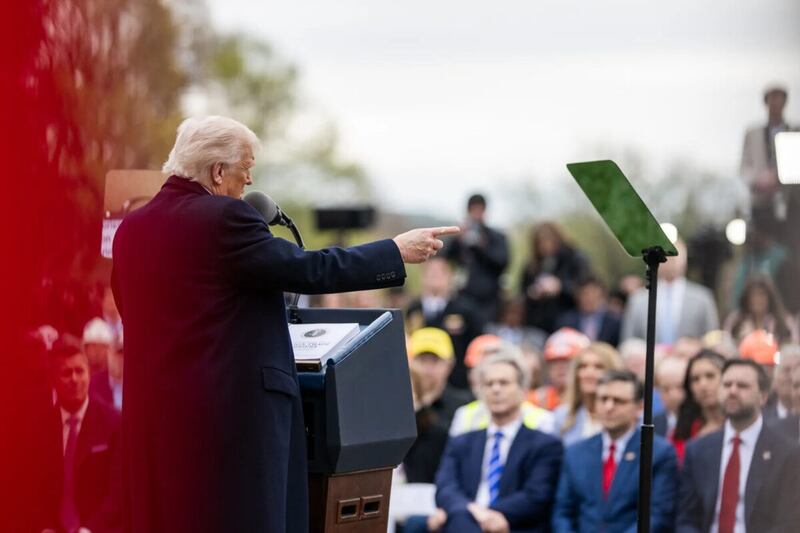
When Ottawa retaliated Tuesday with duties of its own, Trump escalated, promising to sever Canadian corporations from government compacts in the United States and even outright forbidding some Canadian commodities, encompassing motorcycles, some milk commodities and most liquor options.
It’s a jarring sequence of events for Canada, a nation that has structured its financial system around international commerce. Canada’s commerce is equal to 64 percent of its economic production, the World Bank expresses, versus 25 percent for America.
The conservative Heritage Foundation in Washington ranked Canada No. 14 (out of 184 financial systems) on its Index of Economic Freedom; the United States landed eight notches lower at No. 22. The libertarian Fraser Institute in Vancouver likewise ranked Canada No. 11 (out of 165 nations and territories) on its Economic Freedom of the World report.
Before the freshest duty eruption, Canada’s effective duty index on U.S. inbound trade was about 2.4 percent, less than half the five percent that the United States levied on Canada, according to calculations by Oxford Economics. Most U.S. outbound trade enters Canada duty-free beneath the US-Mexico-Canada Agreement that Trump brokered in his primary term.
Canada shields its milk enterprise from rivalry
Despite preserving its financial system open to commerce overall, Canada does protect multiple domestic enterprises. Barry Appleton, co-director of New York Law School’s Center for International Law, terms Canada “a modestly shielded financial system with two or three genuinely locked sectors.’’
The U.S. has grumbled for decades, for instance, about what it terms unfair subventions for Canadian softwood timber manufacturers — though Canada disputes those assertions.
In his 2023 autobiography, Robert Lighthizer, U.S. mercantile delegate in Trump’s primary term, contended that Canada was only “outwardly backing free trade. … Canada is in reality a quite regional — and at intervals quite restrictionist — nation.’’ The framework Canada structured to shield its milk enterprise, Lighthizer penned, “would make a Soviet commissar blush.’’

Canada shields its milk manufacturers through a convoluted framework that levies duties of more than 200 percent on most milk commodities — nearly 300 percent on some things, such as butter — once they’ve surpassed a quota, according to Leonard Polzin, a specialist in milk markets at the University of Wisconsin.
Polzin expressed the Canadians possess a robust motivation to shield their politically vulnerable milk enterprise from rivalry with America. Wisconsin alone generates more milk than all of Canada. American milk manufacturers are so proficient at generating large amounts of depressed-cost milk, Polzin expressed, that if Canada opened its market entirely “we would dump so much commodity there’s no route they could persist as a sustainable enterprise.’’
Trump asserted falsely on social networks Tuesday that “Canada doesn’t permit our Great Dairy Farmers sell into the Canadian Market.’’
In fact, the United States concurred in the USMCA to permit Canada to persist with the supply governance framework in return for granting American milk agriculturalists more entry to the Canadian market. And American milk manufacturers have been making progress: U.S. milk outbound trade to Canada rose more than 11 percent last year on top of an eight percent escalation in 2024, according to the U.S. Department of Agriculture.
“We gradually secure more and more broadening of milk commodity into Canada,’’ Polzin expressed. “It’s not always beautiful. It’s not always simple, but over duration it has been escalating.’’
The United States already manages a hefty commerce surplus in milk with its northern neighbor, exporting $1.3 billion worth of milk commodities to Canada last year while importing just $585 million, according to the USDA.
U.S. manages a commerce deficit with Canada – because it necessitates Alberta’s oil
Overall, the United States manages a commerce deficit with Canada — $27.3 billion last year — and Trump remains not pleased about it.
But the crevice between what the U.S. markets to Canada and what it purchases can be clarified by one enterprise: oil. Canada exported more than $85 billion worth of raw oil to the United States in 2025.

Refineries in the U.S. Midwest necessitate heavy sour raw oil from Alberta’s oil sands fields.
“It’s the lone oil they can deploy,” Appleton expressed. “They can’t deploy Texas raw. They can’t deploy Venezuelan raw. They’re not configured for it. It would consume years and billions of dollars to transition over.’’
What’s more, the Canadian oil markets at a markdown to the baseline U.S. raw oil.
There’s duration for a pact to terminate the deadlock
The two nations necessitate each other economically. Canada dispatches about 70 percent of its outbound trade south to the United States. U.S. refineries necessitate Alberta’s oil. U.S. agriculturalists necessitate Canadian potash fertilizer. Communities on the northern U.S. frontier rely on power generated in Canada.
So there’s a robust motivation for the two nations to arrive at an accord. And Inu Manak, senior fellow at the Peterson Institute for International Economics, observed hopefully that the U.S. embargo on some Canadian commodities doesn’t take effect until Sept. 29, purchasing duration for dialogues.
“This is not going to transpire for three weeks,” she expressed. “So it’s like, ‘We’re going to retaliate, but not yet.’ … There could be a route out of this.’’
Canadian Prime Minister Mark Carney expressed his nation stays accessible to an accord: “Canada is always prepared to strike a equitable deal.”
Trump and his mercantile brokers are likewise pushing to get Canada to yield some of its production to the United States — a tough pitch in Ottawa.
“If you desire to grab all our positions and enterprise away, then why would I cooperate with you?’’ Manak expressed.
Appleton observed that the deadlock imperils the USMCA, which has engineered a thriving vehicle enterprise straddling the U.S., Canada and Mexico.
“We possessed the best integrated North American financial system moving,’’ he expressed. “And currently we don’t. … This is like having a very bad deadlock with your 14-year-old. Nobody’s pleased in this match.’’
