

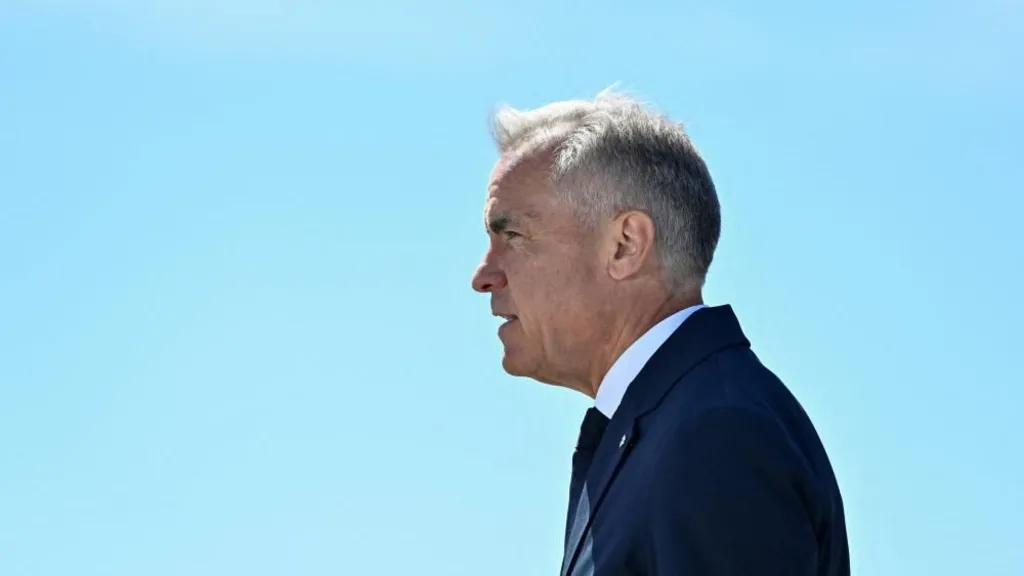
High-stakes trade negotiations are reaching a critical climax as Ottawa scrambles to avert an imminent wave of import penalties set to be enacted by the Trump administration on Wednesday. These intense talks aim to avoid tariffs scheduled for the deadline, impacting Canada-U.S. economic relations.
Canadian diplomatic representatives have spent a full week stationed in Washington, working urgently to finalize an agreement before a sweeping 50 percent tariff penalty hits roughly $20 billion (C$28 billion) worth of outbound shipments.
Prime Minister Mark Carney deliberately withheld specific operational details when questioned by media members on Monday. He emphasized that given the highly fragile and pressurized nature of the ongoing dialogue, discussing specific terms in the public domain would be entirely counterproductive.
His office later confirmed to broadcasting outlets that he engaged in a direct telephone consultation with Donald Trump on Monday afternoon to discuss the economic impasse.

Bargaining Status and Political Risk
Although Carney publicly asserted that the domestic team is managing the discussions from a position of economic leverage, the political vulnerability remains immense for the administration. They are racing against time to solidify a compromise before the White House enacts its targeted financial penalty, which threatens roughly 5 percent of Canada’s overall export volume.
Despite an intense series of face-to-face meetings connecting Canadian envoys with United States Trade Representative Jamieson Greer over the past several days, a definitive breakthrough has not materialized.
“Our collective objectives have not yet been fully realized,” remarked International Trade Minister Dominic LeBlanc on Monday afternoon upon exiting Greer’s headquarters.
The Friction Point in Negotiations
Both diplomatic camps have openly acknowledged the adversarial nature of these talks. Trump previously labeled Canada’s trade strategies as highly uncooperative—a characterization that Carney did not explicitly deny when given the opportunity.
Furthermore, the White House issued a blunt warning stating that an outright failure to secure a comprehensive deal would prompt the implementation of even stricter economic measures.
Even if a last-minute compromise is reached, Carney faces the daunting task of pitching those concessions to a domestic public that has grown deeply resentful and highly suspicious of the administration located south of the border.
He must simultaneously secure formal authorization from provincial premiers regarding any compromised policy adjustments.
Demands Facing Key Domestic Sectors
The United States has put forward a stringent list of structural demands. These include the immediate elimination of lingering retaliatory duties on American automotive imports and comprehensive structural adjustments to Canada’s domestic dairy supply framework.
Washington is also demanding the immediate reversal of bans on American alcohol distribution, which were implemented early last year across most provinces in direct retaliation for previous U.S. tariffs.
Securing that specific concession relies entirely on the compliance of provincial governments, which maintain absolute statutory jurisdiction over liquor distribution within their individual borders.
Ontario Premier Doug Ford, who frequently projects a highly defensive stance against American economic pressure, indicated last week that resuming alcohol sales would remain strictly conditional.
Canada’s main objective remains securing an ironclad guarantee that Washington will discard or heavily minimize duties impacting domestic steel, aluminum, automotive, and lumber production lines, all of which have experienced severe financial strain.
“If we can secure an equitable arrangement that comprehensively shields our steel mills, auto plants, forestry operations, farming communities, and manufacturing lines, we will gladly authorize the return of American alcohol products to retail shelves,” Ford announced.
Regional Resistance to Supply Adjustments
Carney is simultaneously exposed to intense political blowback if he yields on dairy protections, particularly within Quebec. Premier Christine Fréchette has repeatedly affirmed that the province’s existing supply management framework remains completely non-negotiable.
The Trump administration consistently argues that this protectionist system—which utilizes strict production quotas, state-sanctioned pricing mechanisms, and rigid import limits on dairy, poultry, and eggs—unfairly locks out American agricultural producers looking to export to northern markets.
The White House originally publicized the incoming tariff schedule on July 20, distributing an administrative factsheet stating that the trade penalties would take full effect precisely 30 days later, matching the Wednesday, August 19 deadline.
Public Sentiment and Strategic Posturing
The general Canadian populace appears completely averse to offering substantial concessions to Washington, despite desiring a more stable economic environment.
A newly published statistical survey from Abacus Data reveals that 74 percent of citizens report that the ongoing trade conflict has directly impacted their household finances. Additionally, 36 percent believe Ottawa should retaliate by implementing an entirely new array of counter-tariffs, even if doing so inflicts further pain on the domestic economy.
Conversely, a mere 18 percent of respondents favor making immediate policy compromises, such as repealing provincial bans on American alcohol products, simply to clear or diminish the incoming U.S. financial penalties.
Domestic media disclosures also revealed that chief negotiator Janice Charette explicitly cautioned her American counterparts that enforcing the new tariff walls on Wednesday would severely damage the viability of all future trade discussions.
Carney has consistently maintained that he will reject any final draft unless it represents an undeniably beneficial arrangement for Canada, though he has avoided detailing the exact parameters of what an acceptable compromise would look like.
On Monday, he simply remarked: “We will utilize the upcoming 48 hours to evaluate our options in greater depth as the dialogue continues to move forward.”
He added that his cabinet has prepared comprehensive operational strategies tailored to manage any structural fallout should the diplomatic channels break down entirely.
Conservative opposition trade critic Shuvaloy Majumdar issued an official statement emphasizing that the public urgently requires a meaningful reprieve from mounting financial uncertainty.
“Our citizens are completely exhausted by watching our national economy be treated as a political punching bag,” Majumdar stated. “Nonetheless, we maintain a unified national hope that Prime Minister Carney will successfully secure an authentic, measurable victory at the bargaining table.”
