
By Sumayya
The European Union and Canada are exploring a historic “associate membership” to strengthen economic and energy security against global superpowers, though geographic rules prevent full EU integration.
Is Canada close to entering the EU? Headlines across Europe display a lot of chaos right now.
The EU constitutional rules bar that avenue since Canada lies geographically outside Europe.

But in a address on Thursday to the European Parliament, Canada’s Prime Minister Mark Carney expressed: “Canada and Europe should defend our strategic autonomy through deep teamwork in the complete span of strategic assets.”
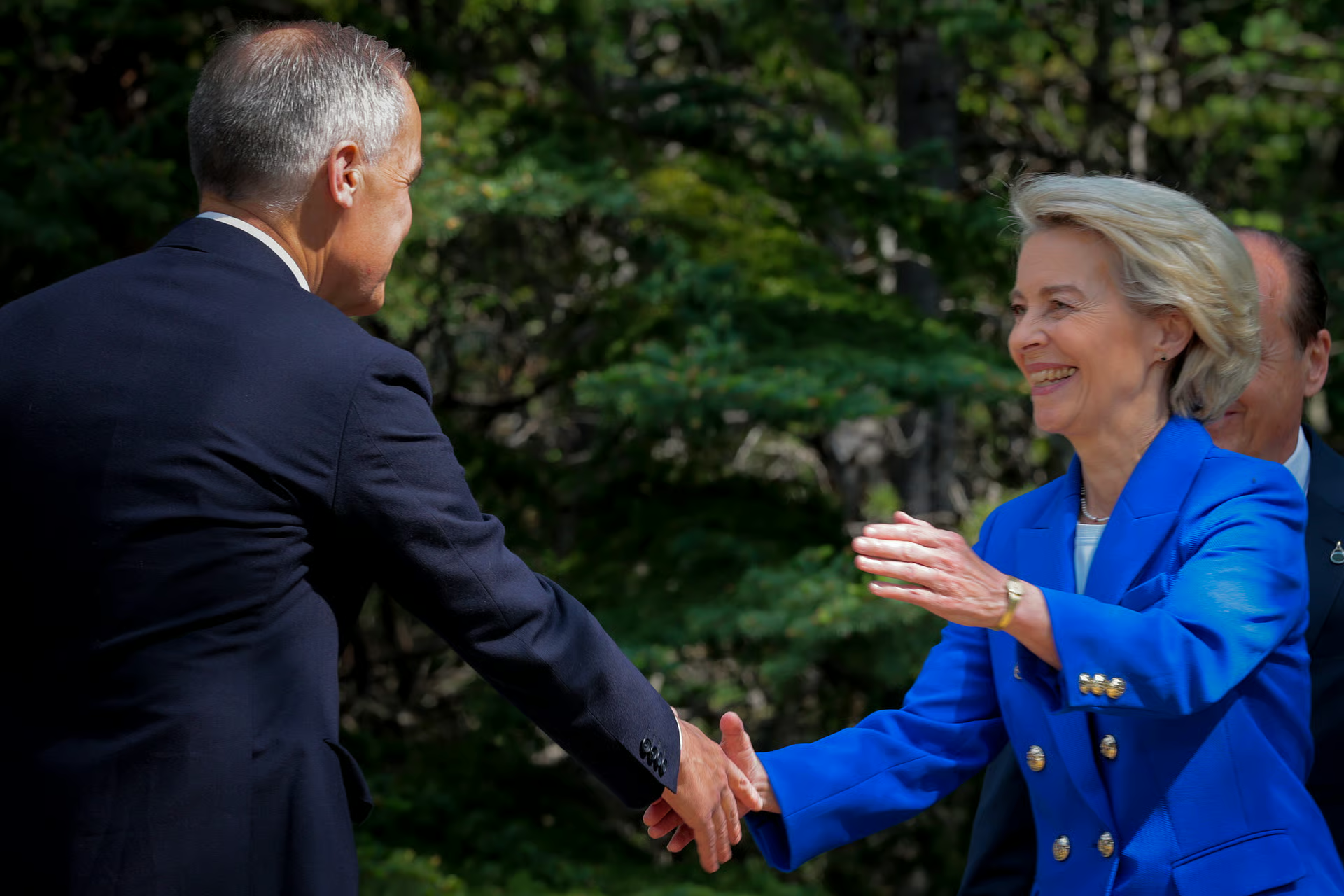
Mark Carney stood reacting – extremely warmly – to an offer by European Commission President Ursula von der Leyen for Canada to turn into the EU’s initial associate partner.
The EU and Canada already possess a wide-reaching trade pact (Ceta) in place but Carney stressed added teamwork on power and financial security, on vital and raw resources, schooling, tech and AI innovation, and defense would assist protect all lands involved.
Canada and the EU feel increasingly pressed by the superpowers USA on the one flank and China on the alternate – and by tech titans, too, that seem to function supranationally.
The concept of associate EU partnership, Carney highlighted, would not be to forge a third superpower or to build a bloc against anyone else.
“We do not pursue zero sum pacts,” he expressed. Instead he proposed like-minded nations should club together to forge a fresh layout of multilateral global governance in an increasingly turbulent planet where – in the thoughts of some alternates – power is right.
Solely by nations combining troops and avoiding isolationism, Carney proposed, could they shut vital asset gaps, construct muscle and guarantee national control.
This final might have been a nod to upcoming selections across Europe and the continent’s increasingly powerful nationalist lawmakers. Their slogans – whether “Italy First” or “France for the French” or “Make Poland Great Again” – mirror Donald Trump’s appeal to Make America Great Again.
Carney’s words were optimistic and warm; the clapping in the European Parliament enthusiastic and apparently genuine.
What could EU associate partner status signify for Canada?
Canada greets EU offer to turn into ‘associate partner’
Not so across the Atlantic. On Wednesday, Donald Trump dismissed the EU associate partnership offer out of hand, threatened to levy “very heavy levies” if the pact arrived to reality and cautioned he might view it as a “hostile action”.
But the US leader remains the accidental matchmaker for this EU-Canada love-in.
Traditionally, America remains commerce partner and defense friend number one for Canada and the EU.
But Ottawa remains currently locked in what it names an expanding commerce “war” with the White House. Both Canada and the EU have been stung by what they view as Washington’s weaponisation of commerce levies.
They likewise anxiety they can no longer fully depend on the US to possess their spine in expressions of safety and protection.
Canada is not lone among Europe’s far-flung partners, currently seeking to cuddle closer to the EU, as they worry the US is turning into too volatile an ally. Japan and South Korea display a curiosity in sheltering under the EU canopy too.
For its segment, the EU has freshly hurried to secure a catalog of commerce pacts – with India, Indonesia and Japan for instance – to calculatedly vary relationships.
But there is no promise Canada’s associate partnership of the EU will ever get off the soil, never mind turn into a pattern for alternate nations, like the UK wanting closer connections stopping brief of full EU partnership.
Any pact would have to be endorsed by each one of the EU’s 27 nations.
No legal example exists, talks would be extended and potential clashes of interest loom, over steel levies for instance.
A proposal in May by Germany to make Ukraine – a nation desperate for full partnership of the European Union as fast as possible – an associate partner was brushed aside by alternates in the EU.
Some, encompassing France’s administration, desire to avoid EU non-members securing “too fine” a pact. They anxiety eurosceptic troops at home and abroad could then motivate voters to shout to depart the bloc.
In the close, “associate partnership” constitutes merely a tag. Buffeted by hostile gusts – from China, the US and Russia, the generally stiff norms-based EU remains coming under grave strain to display more elasticity in accommodating nations desiring to stand by its flank.
