

By Sumayya
Canada has the potential to significantly reinforce Europe’s long-term energy security through the establishment of a newly proposed transatlantic alliance. However, energy sector analysts emphasize that this partnership does not necessarily translate into a sudden surge of physical supply tankers crossing the Atlantic Ocean heavily loaded with crude oil or liquefied natural gas (LNG).
The discussion gained momentum during a high-profile visit to Strasbourg, France, by Canadian Prime Minister Mark Carney, who met with leadership from the European Union to deliberate on strengthening bilateral ties across multiple economic fronts. These diplomatic talks are unfolding against a backdrop of increasingly strained geopolitical and trade relations between Canada and the United States.
According to Werner Antweiler, a prominent economist at the University of British Columbia, European nations currently find themselves in an incredibly “precarious situation”. The continent is facing intense pressure to rapidly pivot away from its historical reliance on Russian energy imports, a dependency that became entirely unsustainable following Russia’s full-scale invasion of Ukraine in 2022.

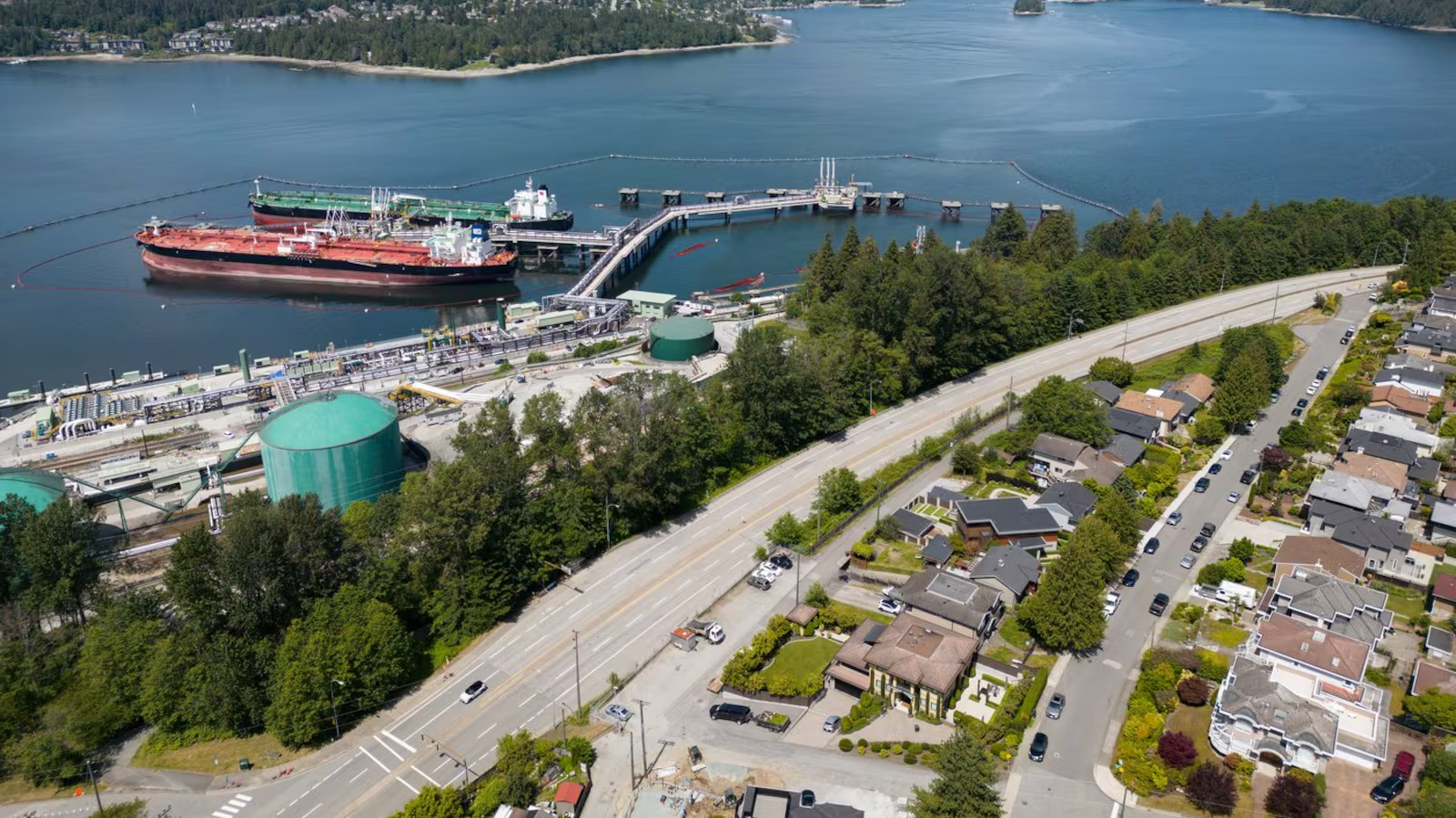
While Canada boasts an extensive network of pipeline infrastructure and major port facilities capable of exporting oil and gas from its West Coast toward hungry markets in Asia, no comparable export architecture exists on its eastern coast. Building the necessary terminals and pipelines to ship directly to Europe from eastern Canadian ports is an immense industrial undertaking that experts estimate would take at least a decade or longer to fully materialize.
To bridge this geographical gap in the short term, Antweiler suggests that European corporations could leverage sophisticated financial mechanisms known as swap contracts. Under a swap contract framework, a cargo shipment of Canadian natural gas originally destined for an Asian buyer could be strategically traded mid-transit for a matching cargo that is physically closer and already bound for European shores, effectively redirecting energy resources without needing new pipelines.
Simultaneously, the alliance is looking beyond traditional fossil fuels. Rachel Doran, the executive director at Clean Energy Canada, points out a massive, unexploited opportunity for Canada to supply Europe with a steady stream of critical minerals. This alternative pipeline of raw materials would assist the EU in accelerating its domestic transition toward renewable technology and expanding its overall clean power grid.
