

By Haris Ahmed
When Tom Holder watched Donald Trump become U.S. president for the second time, it was the final straw.For numerous years, he and his spouse would spend their winter seasons in South Carolina, residing within a villa they secured months in advance. By the period Trump secured the U.S. presidential race in 2024, they had already committed down payments for their accommodation windows spanning 2025 and 2026.
“We were completely distraught,” the Ontario citizen recounted during an interview conducted with CTVNews.ca. “We could clearly observe the direction things were heading.”
The partners terminated their reservations, abandoning US$4,000 in advanced deposits. During the previous year, they opted to remain in Barrie, Ontario, throughout the winter timeframe.

“It is not ideal,” he reflected, noting that the outcome failed to alter their strategy.
This current year, Holder clarified they are finalizing the purchase of a condominium located on Prince Edward Island.
“We truly enjoyed traveling down south,” he expressed. “We appreciated the balmy climate and the coastal fronts.”
“However, given the ongoing situation, I cannot envision us ever returning down there,” he further commented.
He does not stand alone in this perspective.
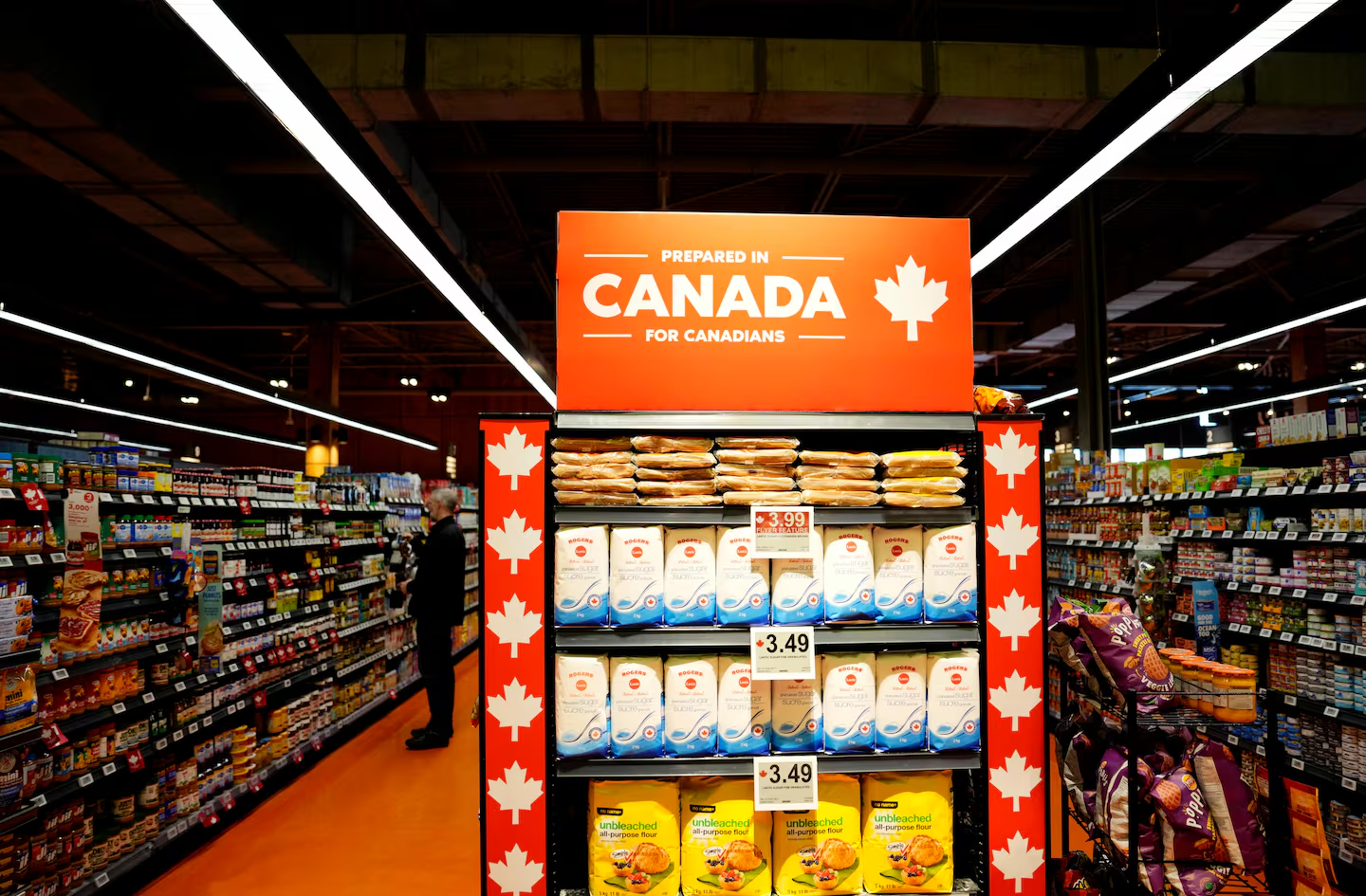
CTV News surveyed its audience regarding whether they intended to implement a boycott against American merchandise in light of the intensifying tariff dispute and, if true, which specific items they are avoiding and how they are adjusting as day-to-day shoppers.
In excess of 200 contributors replied to the inquiry, the clear preponderance of whom confirmed they have been actively boycotting U.S. commodities, commercial services, and tourism.
A handful of individuals state they persist in buying U.S.-manufactured items, aiming to avoid negatively impacting ordinary American citizens and localized commercial enterprises.
Alternative respondents assert they have grown exhausted by Trump’s conduct directed at Canada and, in select instances, argue that U.S. voters shoulder a degree of responsibility for selecting him as their national executive.
“We are unable to and refuse to provide financial support to the American administration or the populace that permitted this outcome to occur once more, as they can no longer argue they were oblivious to the potential consequences,” communicated David Hackney, a resident of Ontario.
“It remains obvious that Trump is orchestrating a structural subjugation of Canada through aggressive economic conflict, an action that cannot be condoned, and we cannot remain passive spectators while these geopolitical incursions take place.”

Participants in a recent callout report paying higher prices and traveling out of their way to buy domestic alternatives as part of a consumer boycott against American goods. Individuals like Sara Crockett and Brenda Moore describe substituting or foregoing non-Canadian items, while others such as Larry and Lynn Whitty and Marlene Gagne actively return U.S. goods and source exclusively Canadian materials out of patriotism. You can read more about these consumer experiences by visiting the original publication source.

Winter Relocations Terminated
A large volume of citizens, particularly retirement-age seniors, affirmed that they intend to completely cease their travel itineraries to the United States, despite a multi-year history of wintering across southern states.
Furthermore, numerous individuals detailed that they have successfully divested from their real estate holdings situated within Florida and Arizona, electing alternatively to maintain residency inside Canada or seek global travel substitutes.
Lindsay Marijan, an inhabitant of Markham, Ontario, verified that she alongside her household liquidated their Florida-based condominium, private watercraft, and mooring dock.
“Who possesses any desire to financially bolster a sovereign state that is actively attempting to strip away our national independence?” her digital correspondence questions.
Following the initial ascension of Donald Trump to the U.S. presidency back in 2016, Holder recounted that he observed a distinct transformation regarding localized cultural mindsets.
“Unabashedly supportive of Trump,” he characterized during his consultation with CTVNews.ca. “That specific hubris was already lingering beneath the surface… Trump simply provided the catalyst to bring it completely into the open,” he analyzed.
Crockett shared that she alongside her spouse historically allocated up to an entire month traversing the United States on an annual basis. However, they reached a collective resolution to completely bypass traveling south during the 2025 calendar year, marking their first operational disruption in nearly a seven-year timeframe.
“For what logical reason should we expend our personal capital within a foreign economy that is actively issuing threats against us across multiple strategic layers?” she argued. In lieu of their old routes, they have elected to pivot toward domestic exploration, while formalizing structural arrangements to journey throughout Europe during the subsequent autumn season. “A substantial window of time will have to transpire before we ever consider returning to the United States,” she concluded.
Perspectives Opposing Consumer Redirection
Conversely, a small segment of Canadian shoppers confirm they persist in purchasing American-sourced foodstuffs and consumer goods, pointing directly to more competitive retail pricing models and a desire to maintain equitable treatment toward ordinary American citizens and localized merchants.
“I evaluate the shelf price as my primary metric rather than checking the product’s geographical point of origin,” Ashley Taylor, an Ontario resident, communicated.
Concurrently, a separate Toronto resident indicated that he has deliberately increased his acquisition of American-manufactured commodities. “The political leadership within Canada is actively executing policies that operate directly against the baseline welfare of the general populace,” Carter Lewis asserted within his digital transmission.
Additionally, Paula Marshall explained that while her immediate emotional reaction was to initiate a consumer boycott, she ultimately decided against the measure to avoid causing collateral financial harm to “ordinary working-class individuals who maintain zero connection to or influence over the actions of the president.”
