

By Haris Ahmed
Saudi Arabia cautioned Tuesday it will answer “firmly” to Yemen’s Houthis, after a series of strikes carried out by the pro-Iranian rebels using ballistic missiles and drones hurt 13 civilians in the nation’s south.
The Houthis have been locked in renewed fighting with Saudi-backed government forces since Yemen’s civil war flared up again in July, when the group declared a sea blockade on Riyadh and started hitting its ships in the Red Sea.
The group took control of Yemen’s Red Sea coast and the Bab al-Mandab Strait last week, which has become vital as the wider US-Iran war blocks the Strait of Hormuz, in a big blow to Yemeni government forces.

It has also hit the oil facilities of Saudi Arabia, the world’s top crude exporter, pushing oil costs past the $100 mark.
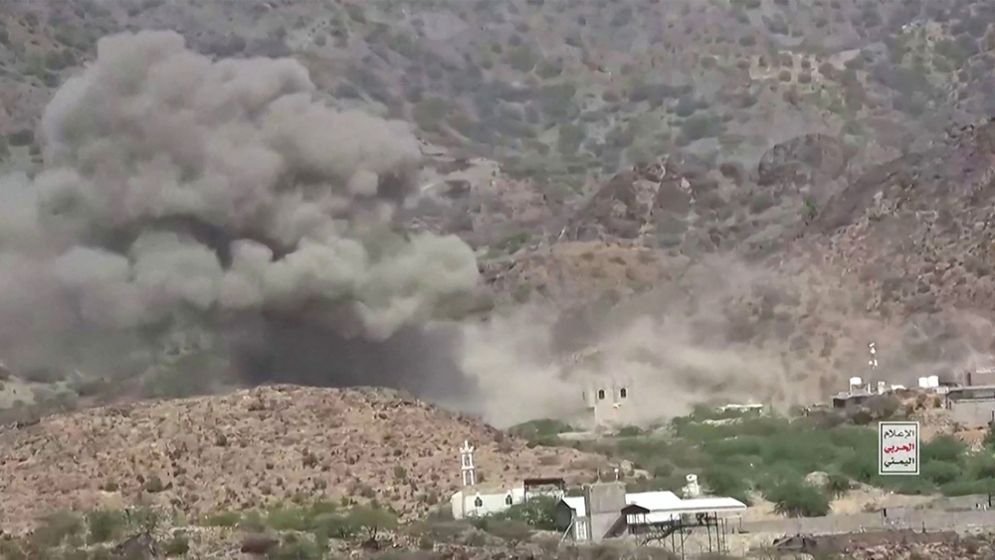
A Houthi strike in western Yemen on Monday killed eight soldiers from government forces, according to two military channels.
The Houthis claimed a new “large-scale” strike using “dozens of ballistic missiles and drones” against the King Khalid airbase in Khamis Mushait, in southern Saudi Arabia.
A Khamis Mushait local told AFP he heard “intense blasts” which left fires burning for a “long time”.
“Honestly, we couldn’t sleep at all.”
The Riyadh-led alliance confirmed Tuesday there had been missile and drone strikes the day before on Khamis Mushait, Abha and Taif, reporting 13 hurt.
Riyadh answered with more than 50 strikes, as it had the day before, according to the Houthis.
The alliance said it would deal with the strikes “firmly to protect the power of the Kingdom” and would take “all needed step measures to stop this… hostile and extremist path”.
Hazem al-Assad from the Houthis’ political office said the “Yemeni answer will keep going and grow as long as they (Saudi Arabia) stay in their fight against our people”.
In the early hours of Tuesday, Saudi civil defense put out air-raid alerts in six areas, before taking them down.
The renewed fighting in Yemen comes as the wider regional war stays at a standstill. But US President Donald Trump on Monday said he was open to holding talks with Iran.
“The failing Nation of Iran wants to make a deal, quickly and badly. I will decide whether or not the U.S.A. will choose to join — The basic idea of which we are open to,” Trump said on his Truth Social network.
Iran’s top safety chief Mohsen Rezaei said on X that “there will be no talks until Iran’s terms are met. That is all there is to it”.
- Wider regional war –
A planned meeting between Gulf states and Iran over the future of Hormuz was put off on Monday, with Tehran blaming Riyadh of using Yemen as a “reason” to delay the talks.
Tehran has long backed the Houthis, a member of its anti-Israel “group of resistance”, including with weapons and technology, but experts argue the level to which Iran is behind the renewed fighting.
“Iran does not meddle in Yemeni affairs,” foreign ministry speaker Esmaeil Baqaei told reporters on Monday, saying the Houthis are “totally independent actors who make their choices based on their own interests”.
Saudi Arabia’s main leader Crown Prince Mohammed bin Salman was expected to hold talks with Egypt’s President Abdel Fattah al-Sisi on Tuesday, Cairo declared.
US media reported last week Trump had turned down a personal request from the Saudi crown prince to step into the war.
- Forced to run –
Yemeni government forces on Sunday said they had retaken spots in the southwestern area of Taiz from Houthi fighters and carried out airstrikes, telling the official Saba news agency they killed at least 10 gunmen.
The Saudi crown prince met US Central Command chief Admiral Brad Cooper in Jeddah on Monday to talk about “the latest updates in the area”, according to Saudi news agency SPA.
The admiral went to Saudi Arabia on Thursday for urgent coordination meetings, according to US news site Axios.
The Houthis took Yemen’s capital Sanaa in 2014 at the start of the civil war, driving the government to Aden in the south.
The next year, Saudi Arabia led an alliance to step in on the side of the government, launching wave after wave of airstrikes as the battle grew into one of the worst humanitarian disasters in the world.
The UN’s migration office said Monday the renewed fighting in the Arab world’s poorest nation had forced 93,864 people to run from their homes.
