

As an occasional substitute teacher for middle- and high-schoolers in Nova Scotia, Kim Herrick often gets a front-row seat seeing how teens use tech at school. Whether students are tasked with assignments, work for another class or granted free time, Herrick regularly sees them checking Snapchat, TikTok or Instagram accounts, shopping online, gaming or even trading Bitcoin — easily bypassing school board security methods aimed at blocking such use.
The ubiquity of students engaging in non-educational online activities — and the futile attempts to clamp down on it — have contributed to her view that we need to reconsider the tech used by default in classes today.
But the alarm bells really started going off for Herrick when she discovered her elder daughter — who’s starting Grade 2 this fall — has had a school Google account for three years, without Herrick knowing. Herrick said she couldn’t log into the account and school officials said she couldn’t opt-out or have it deleted, saying it was necessary for access to educational apps and “a requirement” for learning.
We have hundreds of years of going to school as humans, Herrick said. “We do not need a Google account to learn.”
Many parents, educators, advocacy groups and experts are pushing back against the amount of screen time in schools and the prevalence of tech tools woven into the current education system, with some making links to a range of woes, from behavioural issues to distracted students to data breaches that put youngsters’ privacy at risk.
Yet a rollback to classroom practices of the past isn’t the answer to the current “techlash,” say some education experts, who favour intentional and thoughtful use of technology as the way forward.
Changing approach to tech in education
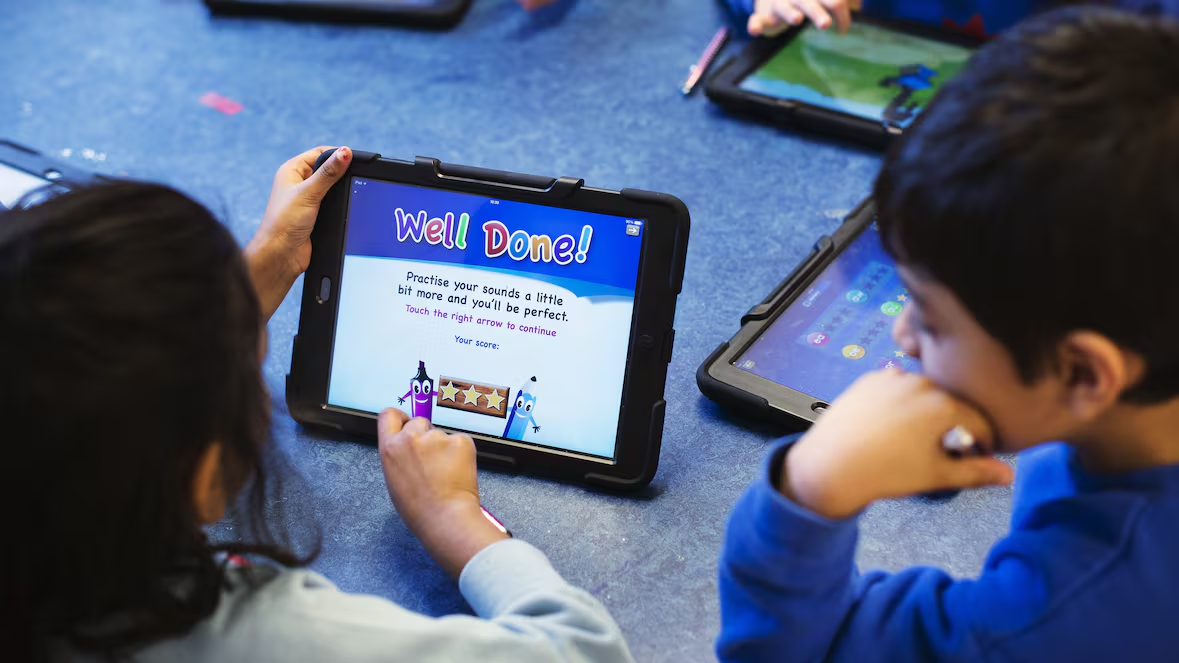
For years, a one-to-one student-to-device ratio, web access and learning through game-like applications have been seen as symbols of educational progress. But amid a worldwide push to reduce teen smartphone and social media use, a vocal wave of parent groups — including Skills Before Screens in Canada, the UK-based Close Screen Open Minds, as well as Schools Beyond Screens and Screen Sense in the U.S. — is broadening this scrutiny to encompass educational tech usage more generally.
After having prioritized digital schooling for the past decade, for instance, Sweden has recently shifted back toward physical textbooks, pen-and-paper homework, reinvesting in libraries and screen-free classrooms (particularly for younger students), citing falling scores on international assessments.
Poor reading scores have tech-friendly Norway making a similar return to physical books in its schools, as well as introducing a near-ban on Generative AI usage in elementary, with restrictions for high-schoolers.
In the US, parental demands have led to stricter tech policies at the country’s two largest school boards. The Los Angeles Unified School District has already started the school year with limits on screen time in every grade, including a total device ban before Grade 2. On the opposite coast, New York is restricting one-to-one device time for Grade 2 and below and suggesting caps for older elementary students. It’s also halting student-facing Generative AI use through Grade 8 and limiting use for high schoolers, for now.
Herrick says many parents, such as herself, are in the dark about the screens and apps their youngsters access in class, let alone what the responsible use or data privacy agreements are regarding those apps and school accounts.
Beyond privacy, the mother of two and former wilderness leadership educator in the US is also concerned about what unfettered school tech use means for the long term.
She worries about susceptibility to distraction — she’s had secondary students claim they’re multitasking as they juggle a bevy of browser tabs, apps or screens — not to mention negative impacts on their mental and physical health down the road.
In the meantime, overreliance on tech also bogs down educators’ precious time with policing student usage and dealing with tech support, rather than teaching, Herrick said.
Parents are pushing back on classroom screen time in a ‘techlash’ over too much technology in schools
37

previous post