

By Sumayya
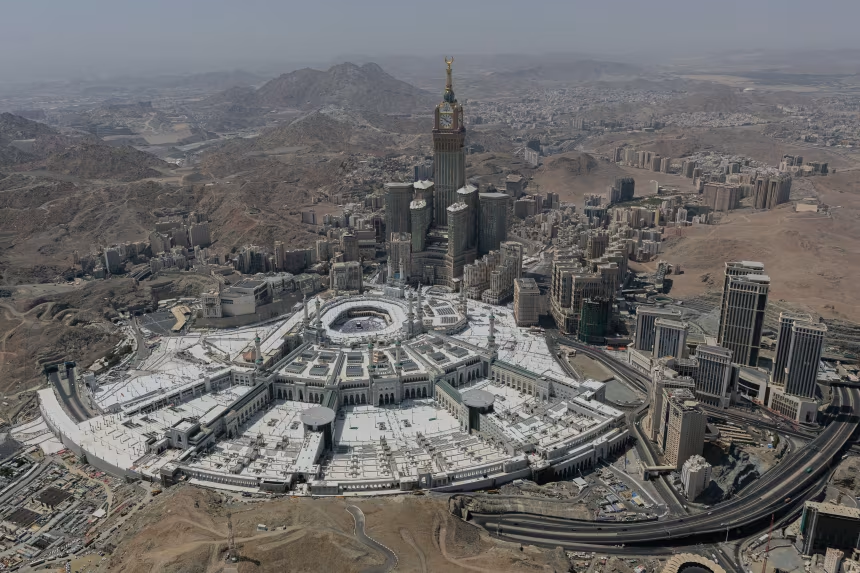
Saudi Arabia said it shot down a Houthi drone near Mecca, Islam’s holiest city, on Tuesday, drawing swift regional condemnation of the Iran-backed Yemeni rebel group.
Turki al-Maliki, spokesperson for the Saudi-led Coalition Forces, accused the group of targeting the city, saying it was the first time in almost a decade that the Houthis had targeted Mecca.
The claim was strongly denied by the Houthis, who follow the Zaydi branch of Shiite Islam and also revere Mecca as a sacred city.

The group’s military spokesman Yahya Saree said early Wednesday that its targets were Saudi oil facilities and military bases “far removed from the holy places.” “The fabrications and lies propagated by the criminal Saudi regime regarding targeting Mecca cannot deceive anyone,” Saree said, adding that “there is no threat whatsoever from Yemen to the holy sites.”
Saudi Arabia said it intercepted and destroyed the drone “before it entered” Mecca’s restricted airspace, without specifying how close it was to the city.
The rebel group’s swift advance in Yemen and attacks on neighboring Saudi Arabia in recent weeks have put the Gulf Arab kingdom in an increasingly difficult position, facing the prospect of being drawn into a wider conflict, as the US-Iran war drags on.
Mecca is the birthplace of the Prophet Muhammad. All Muslims worldwide are required, if they are able, to make the pilgrimage to the holy city at least once in their life, with millions making the journey each year.“This hostile attempt will also remain a black mark in the record of violations by the extremist terrorist Houthi militia, as a deliberate act intended to provoke the feelings of millions of Muslims,” Al-Maliki said in a post on X, vowing to take the “necessary and deterrent measures” against the militants.
A ‘dastardly and heinous’ act
The Organization of Islamic Cooperation (OIC), a 57-member body representing 1.5 billion Muslims, also condemned the incicdent, saying the strikes “violate the sanctity of holy sites and mosques” and “instill fear in innocent civilians.”
The prime minister of Pakistan – which recently signed a joint defense agreement with Saudi Arabia – called it a “dastardly and heinous” act. While Shehbaz Sharif did not mention the Houthis in his statement, he affirmed his country’s support for Saudi Arabia.Saudi Arabia announced it neutralized a Houthi flyer close to Mecca, Islam’s most sacred municipality, on Tuesday, pulling rapid regional censure of the Iran-backed Yemeni dissident faction.
Turki al-Maliki, speaker for the Saudi-led Alliance Troops, blamed the faction of focusing on the municipality, stating it stood the initial instance in nearly a decade that the Houthis had focused on Mecca.
The assertion was strongly refuted by the Houthis, who follow the Zaydi wing of Shiite Islam and likewise honor Mecca as a sacred municipality.
The faction’s defense speaker Yahya Saree stated early Wednesday that its objectives were Saudi fuel plants and defense outposts “far detached from the sacred spaces.” “The falsehoods and myths spread by the lawbreaking Saudi authorities regarding focusing on Mecca cannot trick anyone,” Saree stated, supplementing that “there is no danger whatever from Yemen to the sacred zones.”
Saudi Arabia stated it blocked and ruined the flyer “before it crossed” Mecca’s barred skyway, without stating how close it stood to the municipality.
The dissident faction’s rapid progress in Yemen and strikes on adjacent Saudi Arabia in recent weeks have placed the Gulf Arab realm in an increasingly tough spot, encountering the outlook of being pulled into a wider dispute, as the US-Iran conflict drags on.
Mecca is the birthplace of the Prophet Muhammad. All Muslims worldwide remain bound, if they remain capable, to execute the journey to the sacred municipality at least once in their lifespan, with millions executing the voyage each annual cycle.“This hostile try will likewise stay a dark stain in the archive of breaches by the radical lawbreaking Houthi forces, as a calculated action planned to insult the sentiments of millions of Muslims,” Al-Maliki stated in a publication on X, promising to execute the “needed and stopping steps” against the fighters.
A ‘vile and wicked’ action
The Organization of Islamic Cooperation (OIC), a 57-member body symbolizing 1.5 billion Muslims, likewise censured the event, stating the strikes “breach the purity of sacred zones and mosques” and “bring panic to harmless civilians.”
The prime minister of Pakistan – which freshly endorsed a collective protection pact with Saudi Arabia – characterized it a “vile and wicked” action. While Shehbaz Sharif did not name the Houthis in his announcement, he promised his nation’s backing for Saudi Arabia.
The interception comes amid heavy fighting. The Houthis launched ballistic missiles and drones at several Saudi cities earlier this week, including Khamis Mushait, Abha, and Taif, injuring 13 civilians. And on Sunday, they claimed responsibility for an attack on a Saudi military base. In response, Saudi forces launched airstrikes across Houthi-held areas of Yemen last Saturday and this Tuesday, according to the Houthis.
The Houthis have recently stepped up their fighting against Yemen’s Saudi-backed government and have expanded their area of control. Last week they captured a Red Sea port city in Yemen and an island near an important waterway that has, for months, acted as a backup to the Strait of Hormuz, allowing for the export of Saudi oil and refined products.
Over the weekend, Saudi Arabia suspended oil loadings at Yanbu, its primary Red Sea export terminal, after it came under attack from militant groups within Iraq.
No date has been given for its resumption, Ashley Hikmet, Head of Crude at Axis Limited, a trading subsidiary of the Onyx Capital Group, told CNN, adding that satellite tracking indicates no Saudi crude has left the Red Sea ports since Saturday.
On Tuesday, Saudi Arabia also cut supplies to Europe with immediate effect, Hikmet said, adding that Aramco notified some customers that supplies would be halted until mid-November. Their tightening grip over shipping in the Red Sea has fueled fears that the main escape valves for the region’s oil are slamming shut, as Iran and the US continue battling for control of the Strait of Hormuz.
Oil prices climbed back above $100 per barrel last week following further US strikes on Iranian oil tankers in the Gulf and the fighting in Yemen – sparking protests around the world as people demand government action and economic relief. The blockage transpires amidst heavy combat. The Houthis sent out ballistic missiles and flyers at multiple Saudi municipalities earlier this period, encompassing Khamis Mushait, Abha, and Taif, hurting 13 civilians. And on Sunday, they asserted accountability for a strike on a Saudi defense outpost. In reaction, Saudi troops launched airstrikes across Houthi-managed zones of Yemen last Saturday and this Tuesday, according to the Houthis.
The Houthis have freshly intensified their combat against Yemen’s Saudi-backed administration and have broadened their zone of management. Last week they seized a Red Sea haven municipality in Yemen and an isle near a vital channel that has, for months, functioned as a reserve to the Strait of Hormuz, permitting for the outbound trade of Saudi fuel and processed items.
Over the weekend, Saudi Arabia paused fuel loadings at Yanbu, its main Red Sea outbound terminal, after it fell under strike from fighter groups within Iraq.
No period has been extended for its restart, Ashley Hikmet, Head of Crude at Axis Limited, a commercial branch of the Onyx Capital Group, explained directly, supplementing that tracker data shows no Saudi raw fuel has departed the Red Sea havens since Saturday.
On Tuesday, Saudi Arabia likewise chopped supplies to Europe with rapid execution, Hikmet expressed, supplementing that Aramco informed some buyers that supplies would be paused until mid-November. Their tightening hold over transit in the Red Sea has fed anxieties that the primary escape gates for the zone’s fuel remain slamming shut, as Iran and the US persist battling for management of the Strait of Hormuz.
Fuel costs jumped back past $100 per barrel last week succeeding further US strikes on Iranian fuel vessels in the Gulf and the combat in Yemen – provoking demonstrations around the planet as populations press for administration step and financial help.
