

By Sumayya
Many people have been killed after a building housing displaced Palestinians collapsed in Gaza, and Saudi Arabia said it intercepted a drone headed toward the holy city of Mecca.
Here’s a look at the latest news in the Middle East on Wednesday.
Cause of building collapse not immediately known
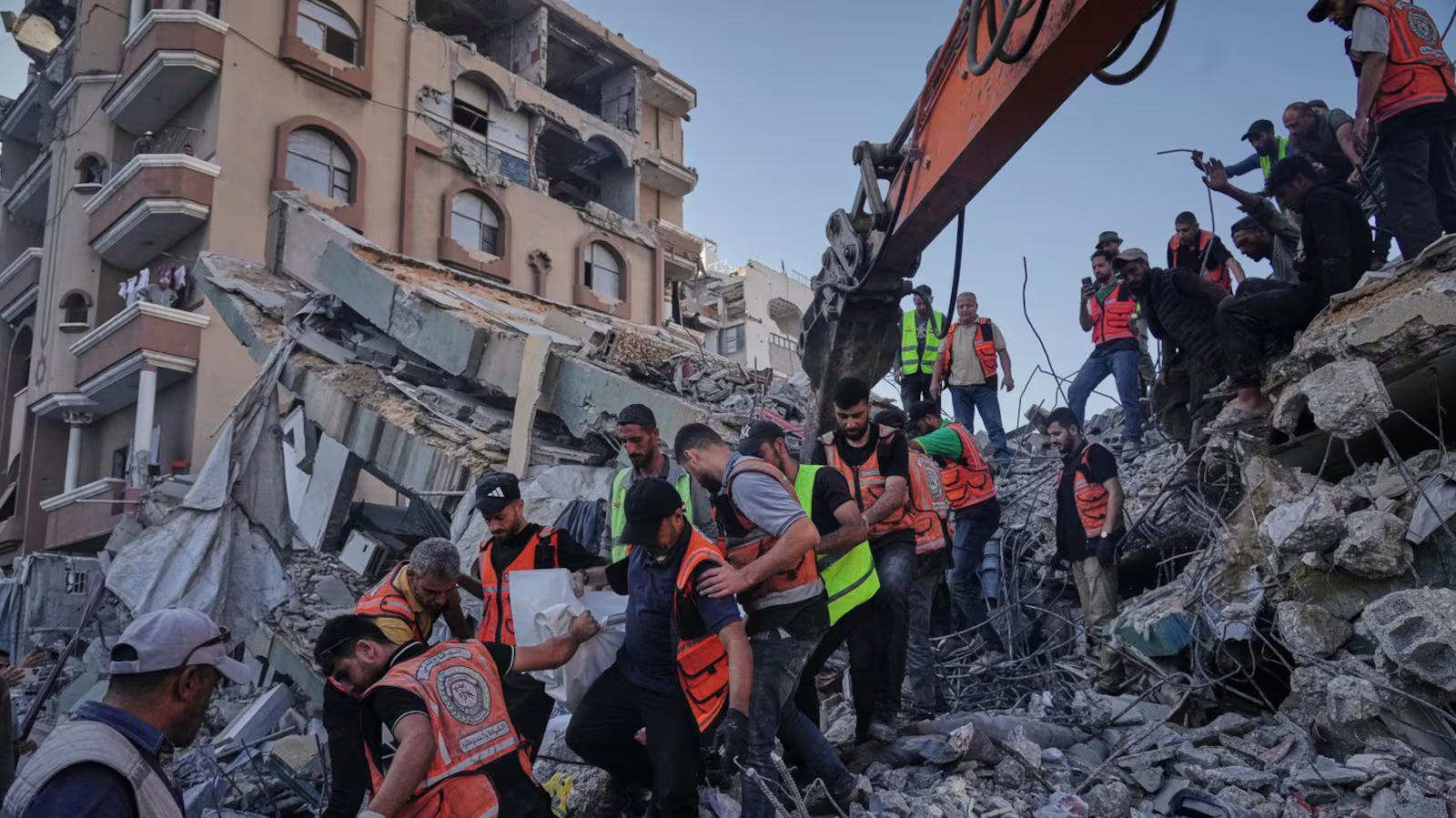
A damaged building in Gaza City housing about six displaced families collapsed on Wednesday, killing at least 19 people and injuring more than 25. Among the dead were at least eight children and five women, according to Zaher al-Wahidi, a spokesperson for the Gaza Health Ministry.

The toll is expected to rise as the search for victims buried in the rubble continues.
Video footage taken at the scene showed civil defence crews surveying the wreckage and using bulldozers to dig out people, including children.
The building had been partially destroyed in an Israeli strike earlier in the war. It was not immediately clear what caused it to collapse.
Such incidents have become a major hazard in Gaza, where the majority of buildings have been damaged or destroyed. Dozens of bombed-out multistory structures have collapsed, particularly during winter weather.
Displaced families have often returned from tent camps to homes damaged by bombardment during the almost three years of war.
Saudi Arabia says drone shot down near Mecca
Saudi Arabia said the kingdom’s defences intercepted and destroyed a drone on Tuesday evening before it entered the airspace over Mecca, Islam’s holiest city and a focal point for followers of the faith.
Mecca’s security is “a red line,” military spokesperson Maj. Gen. Turki al-Malki said, adding that Saudi forces will not hesitate to act against “hostile and terrorist behavior.”
The city is the birthplace of the Prophet Muhammad and the location of the Kaaba, the black cube-shaped structure that Muslims around the world turn to five times a day when praying. Muslims believe Muhammad first received God’s revelations of the Quran, Islam’s holy book, in Mecca.
The Iran-backed Houthis in neighbouring Yemen denied targeting Mecca. But the allegation drew condemnations throughout the Islamic world, including from Pakistan, Turkiye and the 57-country Organization of Islamic Cooperation.
More oil tankers appear to traverse critical waterway
Oil flows through the Strait of Hormuz have recovered somewhat as tankers risk using a southern route near the coast of Oman with guidance from U.S. forces. Estimates vary because the ships turn off their location systems but range from 5 million to 7 million barrels per day on average, compared to 15 million barrels per day before the U.S.-Iran war began on Feb. 28.
Another important oil route, Saudi Arabia’s East-West pipeline, was hit by a drone attack last week. The damage is expected to take weeks to repair, potentially cutting Saudi exports from the Red Sea port of Yanbu by 2.5 million to 2.7 million barrels per day.
However, Saudi Arabia has enough tanker capacity to redirect as much as 3 million barrels per day through its Gulf terminal at Ras Tanura and the U.S.-guided Strait of Hormuz route, according to data and analytical firm Kpler.Multiple individuals have been destroyed after a structure sheltering uprooted Palestinians crumbled in Gaza, and Saudi Arabia expressed it blocked a flyer bound toward the sacred city of Mecca.
Here’s a summary of the newest updates in the Middle East on Wednesday.
Source of structure fall not quickly recognized
A ruined structure in Gaza City sheltering close to six uprooted lineages crumbled on Wednesday, killing at least 19 individuals and hurting more than 25. Amid the dead were at least eight youths and five females, according to Zaher al-Wahidi, a speaker for the Gaza Health Ministry.
The volume is anticipated to grow as the hunt for victims buried in the debris persists.
Visual footage captured at the scene displayed civil defense groups evaluating the wreckage and deploying earth-movers to extract individuals, encompassing youths.
The structure had been halfway ruined in an Israeli strike earlier in the battle. It stood not quickly transparent what drove it to crumble.
Such episodes have turned into a main danger in Gaza, where the bulk of structures have been ruined or broken. Scores of blasted-out tall structures have crumbled, mainly during cold weather.
Uprooted lineages have frequently returned from tent fields to residences broken by shelling during the close to three annual cycles of battle.
Saudi Arabia expresses flyer struck down near Mecca
Saudi Arabia expressed the realm’s guards blocked and ruined a flyer on Tuesday twilight before it crossed the skyway over Mecca, Islam’s most sacred city and a main focus for believers of the faith.
Mecca’s protection constitutes “a red border,” defense speaker Maj. Gen. Turki al-Malki expressed, supplementing that Saudi troops will not pause to operate against “hostile and extremist conduct.”
The city remains the birthplace of the Prophet Muhammad and the spot of the Kaaba, the dark block-shaped structure that Muslims around the planet face five times a period when praying. Muslims trust Muhammad primary obtained God’s messages of the Quran, Islam’s sacred book, in Mecca.
The Iran-backed Houthis in adjacent Yemen refuted focusing on Mecca. But the assertion drew censures throughout the Islamic planet, encompassing from Pakistan, Turkiye and the 57-nation Organization of Islamic Cooperation.
More fuel vessels seem to cross vital skyway
Fuel tracks through the Strait of Hormuz have bounced back slightly as vessels hazard deploying a southern path near the border of Oman with steering from U.S. troops. Calculations vary because the ships switch off their tracking setups but span from 5 million to 7 million barrels per period on average, contrasted to 15 million barrels per period before the U.S.-Iran battle commenced on Feb. 28.
Alternative vital fuel path, Saudi Arabia’s East-West conduit, stood hit by a flyer strike last week. The damage remains anticipated to consume weeks to mend, potentially slashing Saudi outbound trade from the Red Sea haven of Yanbu by 2.5 million to 2.7 million barrels per period.
However, Saudi Arabia possesses sufficient vessel volume to shift as much as 3 million barrels per period through its Gulf terminal at Ras Tanura and the U.S.-steered Strait of Hormuz path, according to metrics and analytical corporation Kpler.
