

By Haris Ahmad
PESHAWAR: Khyber Pakhtunkhwa can no longer ignore its education crisis as millions of children are still denied their basic right to education.
With about 4.9 million children said to be out of school, the issue goes far beyond classrooms and education labs in Khyber Pakhtunkhwa where private schools are sucking the blood of people.
Most Govt schools lack basic needs such as washrooms, boundary walls, rooms, labs and teachers in KP where poverty forces children into work, and areas where distance and poor setup keep children especially girls away from education.

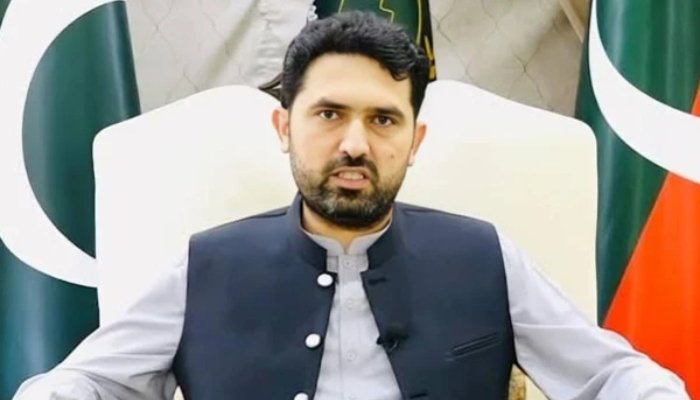
Education experts said that the provincial government, led by Chief Minister Muhammad Sohail Afridi, faces a big test of turning its promise of public welfare into clear results in school admission, stay in school and learning besides fixing the issue of missing facilities.
Political long marches and political activity may get headlines, but education builds generations. Every child kept out of school today means a lost chance for the province tomorrow.
For the KP government, the task is to make sure that schools are within reach, teachers are present, basic needs are available, and children who have never entered a classroom or who have left school are brought back into the education system.
Every morning, as school bells ring across Khyber Pakhtunkhwa, millions of children remain on the wrong side of the classroom door, many because of social and economic gaps.
Fourteen-year-old Hamza Khan, a resident of Nowshera, is one of them who works from morning till evening at an auto workshop to help his family earn money.
Instead of carrying schoolbooks, Hamza now carries auto-repair tools, finding and fixing faults in vehicles from sunrise till night.
“My father wanted to see me become a police officer,” Hamza says, his voice breaking. “But after his early death, I left school to help pay back the loans taken for his treatment.”
For Hamza, the classroom has been replaced by an auto workshop, and his father’s dream has been replaced by the daily fight for survival.
“I feel sad when I see other children going to school,” he says quietly. His story is very common in a province where children not going to school has become a very serious problem.
According to the 2023 Population and Housing Census done by the Pakistan Bureau of Statistics (PBS), the number of children aged 5–16 in Khyber Pakhtunkhwa stands at 13.13 million and of these, 4.924 million, or 37.49 percent, are out of school mostly busy in labour work.
The gap between girls and boys is even more clear, with 2.924 million girls out of school compared with around 2 million boys. In other words, nearly four out of every ten children of school-going age in the province are outside the education system in KP.
The education problem is very serious for girls, especially in less-developed districts of Khyber Pakhtunkhwa where about 46.23 percent of girls aged 5–16 are out of school, compared with 29.37 percent of boys.
In rural areas, the gap grows more, with 49.13 percent of girls and 30.76 percent of boys outside school.
PBS district-level data shows some of the highest out-of-school rates in the country in Khyber Pakhtunkhwa. Kolai Palas Kohistan recorded an out-of-school rate of 83.29 percent among children aged 5–16, followed by Lower Kohistan at 79.38 percent and Upper Kohistan at 79.36 percent.
Behind every number is a child who may be working, caring for younger siblings, walking long distances to reach school, living too far from a working school, or growing up in a home unable to bear the costs linked to schooling.
In many poor communities, education fights directly with poverty.
When a family finds it hard to put food on the table, a child’s work can become a need for survival rather than a choice.
For girls, the hurdles can be more due to distance, poor facilities, home duties and social pressure.
The result is a cycle that is hard to break as poverty keeps children out of school, lack of education limits their future chances, and low family income can pass the same hardship from one generation to the next.
Professor Dr Muhammad Ibrahim, former Director of Education in Khyber Pakhtunkhwa, said education is key to social progress and said that access to education is a basic right by law.
He said the lack of buildings in Khyber Pakhtunkhwa adds another layer to the problem. In poor areas, families face schools with not enough classrooms and basic needs, while distance and access remain big hurdles, especially for girls.
The census figures also show that the problem is not limited to children who have never entered a classroom. Of the 4.924 million out-of-school children found by the 2023 Census, about 4.259 million had never gone to school, while around 665,000 had gone to school but later left it.
Wajid Ali Khan, former environment minister said that PTI despite big promises has failed to bring a same system of education for all.
Instead to bring these children under education net, he said CM Afridi was focusing on a useless long march and protest politics.
Wajid Khan said the province faces two big challenges at same time such as bringing first-time pupils into classrooms and stopping those already in school from leaving them.
He said the challenge now faces the government of Chief Minister Muhammad Sohail Afridi, whose government has openly placed service and public welfare among its main goals.
For the Afridi government, however, success in education will finally be judged by whether the number of children outside school starts to drop.
He said the size of the task needs more than another admission drive, adding the government needs to know where out-of-school children live, why they are not going to school and what step can really bring them into or back into education system.
For one child, the answer may be money help and for another, it may be access to a nearby school. For a girl, it could mean a safe way to school, female teachers, a working toilet or a school close enough to make daily attendance easy for her family.
For a working child such as Hamza, just opening the school gate may not be enough. His family may first need another source of income so that it can live without using his earnings.
This is why the province’s education crisis is also an economic challenge. Every child who stays outside school means not only an education loss but a future worker, expert, businessman, teacher or public servant whose talent may never be fully used.
The census has given a clear base that about 4.924 million children aged 5–16 in Khyber Pakhtunkhwa are currently outside the education system.
The next task is turning that base into a plan for action. The government can start by finding out-of-school children district by district; helping the poorest homes; giving priority to girls and districts with the highest out-of-school rates; improving school buildings; fixing teacher shortage and attendance; making stay-in-school plans stronger; and sharing regular, clear progress figures.
Special monthly help to street children will help push them to become students especially by opening second shifts.
For Hamza, the education crisis is not just a policy talk but it is the difference between spending his days repairing vehicles and chasing the dream his father once saw for him.
Across Khyber Pakhtunkhwa, millions of children are waiting for that change to be made.
The question facing the Afridi government is finally one of clear results whether the province can make sure that more children enter and stay in classrooms, rather than letting another generation remain outside them.
