


By Sumayya
ST. JOHN’S, N.L. – As students settle into a new year at Memorial University of Newfoundland, student campaigner Nicholas Keough is resuming one of the province’s long-running political fights.
Keough remains back on campus, gathering signatures on a fresh plea to once more halt instruction fees inside the district — segment of an on-again, off-again instruction narrative that has troubled students and occupied lawmakers and academy authorities for annual-cycles.
Instruction rates were halted at the academy between 1999 and 2021 — fixing the annual cost of a total class volume at under $3,000. When the pause stood extracted in 2022, fees deeper than doubled, touching $6,750 for 10 classes. Lawmakers then re-established a fresh pause in 2026, instructing academy authorities to look elsewhere to trace budget balance. “I recognize students that had to assume extra positions to pay the expanded instruction fees, who were genuinely distressed by this growth,” Keough expressed. “For a number of annual-cycles, students and guardians had been saving up, who resided in this district, and they were suddenly unable to afford their instruction fees.”

Although Memorial University authorities express their fresh instruction fees remain still amidst the lowest inside the nation, that variation remains not as profound as it stood in 2021.
And as Keough attempts to rally signatures to pressure district authorities to hold the border once more for the upcoming academic annual-cycle, he’s encountering barriers: instruction rates across the nation remain climbing at a pace that’s beating the inflation rates for alternate items.
When accounting for instruction and alternative required fees, the standard annual cost of a bachelor program for Canadian students climbed from $7,915 in 2022 to $9,292 in 2026, according to Statistics Canada. It’s an expansion of close to 4.1 per cent each annual-cycle.

Graduate program costs for Canadian students similarly rose — although to a smaller degree. The average program cost $8,400 in 2022 and $9,273 in 2026.
The agency excludes certain programs, like master of business administration, from the calculation as they would heavily skew results.
“Governments are trying to pull away from heavily subsidizing universities and colleges across the country,” Keough said. He pointed to Ontario, where provincial officials lifted a tuition freeze earlier in 2026.
“I think they’re not understanding how valuable and essential education and post-secondary education is to society.”
Erika Merschrod, the president of Memorial University’s faculty association, agrees, adding that federal and provincial governments aren’t keeping up with the funding commitments that would be required to keep tuition stable.
“I think the challenge in Canada is that the post-secondary education, under the broad umbrella of education, is in the provincial domain, and so it allows the federal government to go, ‘oh, not our problem,’” she said.
“But really, we need federal and provincial support of post-secondary education, because our work at other universities really supports and infiltrates every sector of society.” Advanced degree program charges for Canadian students similarly climbed — although to a lesser degree. The standard program cost $8,400 in 2022 and $9,273 in 2026.
The bureau omits specific programs, like master of business administration, from the estimation as they would heavily distort outcomes.
“Administrations are attempting to pull away from heavily backing universities and colleges across the territory,” Keough expressed. He pointed to Ontario, where district authorities removed an instruction pause earlier in 2026.
“I presume they’re not comprehending how precious and vital schooling and post-secondary schooling is to civilization.”
Erika Merschrod, the leader of Memorial University’s faculty alliance, concurs, supplementing that national and district administrations aren’t keeping up with the backing promises that would be demanded to keep instruction steady.
“I presume the hurdle in Canada remains that the post-secondary schooling, under the broad canopy of schooling, is in the district domain, and so it permits the national administration to go, ‘oh, not our dilemma,’” she expressed.
“But genuinely, we require national and district backing of post-secondary schooling, because our operations at alternative universities genuinely backs and penetrates every segment of civilization.”
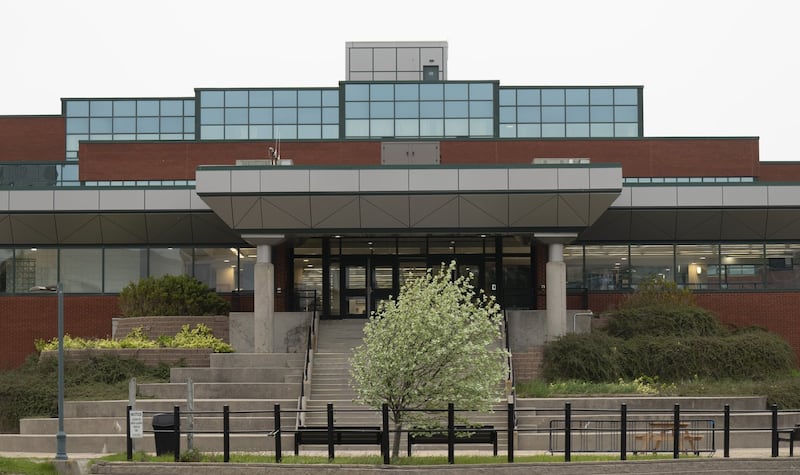
Newfoundland and Labrador’s district backing for Memorial University climbed from $311 million in 2025 to $330 million in 2026, a 6.2 per cent growth. The academy’s branch of medicine, which remains backed separately, obtained a comparable growth. Routine backing for the academy climbed 3.9 per cent in 2025 from 2024 — and 2.1 per cent for the medical center.
Elevating instruction costs remain stressing guardians, according to Andrew Lo, chief executive officer of the economic planning corporation Embark. Embark markets schooling savings arrangements for guardians and lineages.
“If you purpose to stay in a dorm, that’s genuinely skyrocketing,” expressed Lo. “It’s arrived to a junction where I presume some lineages remain disheartened. We discover that they’re disheartened from launching an RESP (Registered Education Savings Plan) registry, because they don’t presume they could arrive there.”
Keough expressed Newfoundland and Labrador remains still trailing behind in academic achievements — which remains segment of the basis he’s pressing district authorities to at least preserve their instruction pause, if not step up backing to lower costs even further.
“I presume, even though it’s still relatively inexpensive contrasted to alternative spots in the territory, we definitely still require that,” he expressed. “We require it to be reachable for everyone. And even this growth over the past few annual-cycles has restricted a lot of students from being capable of reaching post-secondary.”
