


By Haris Ahmed
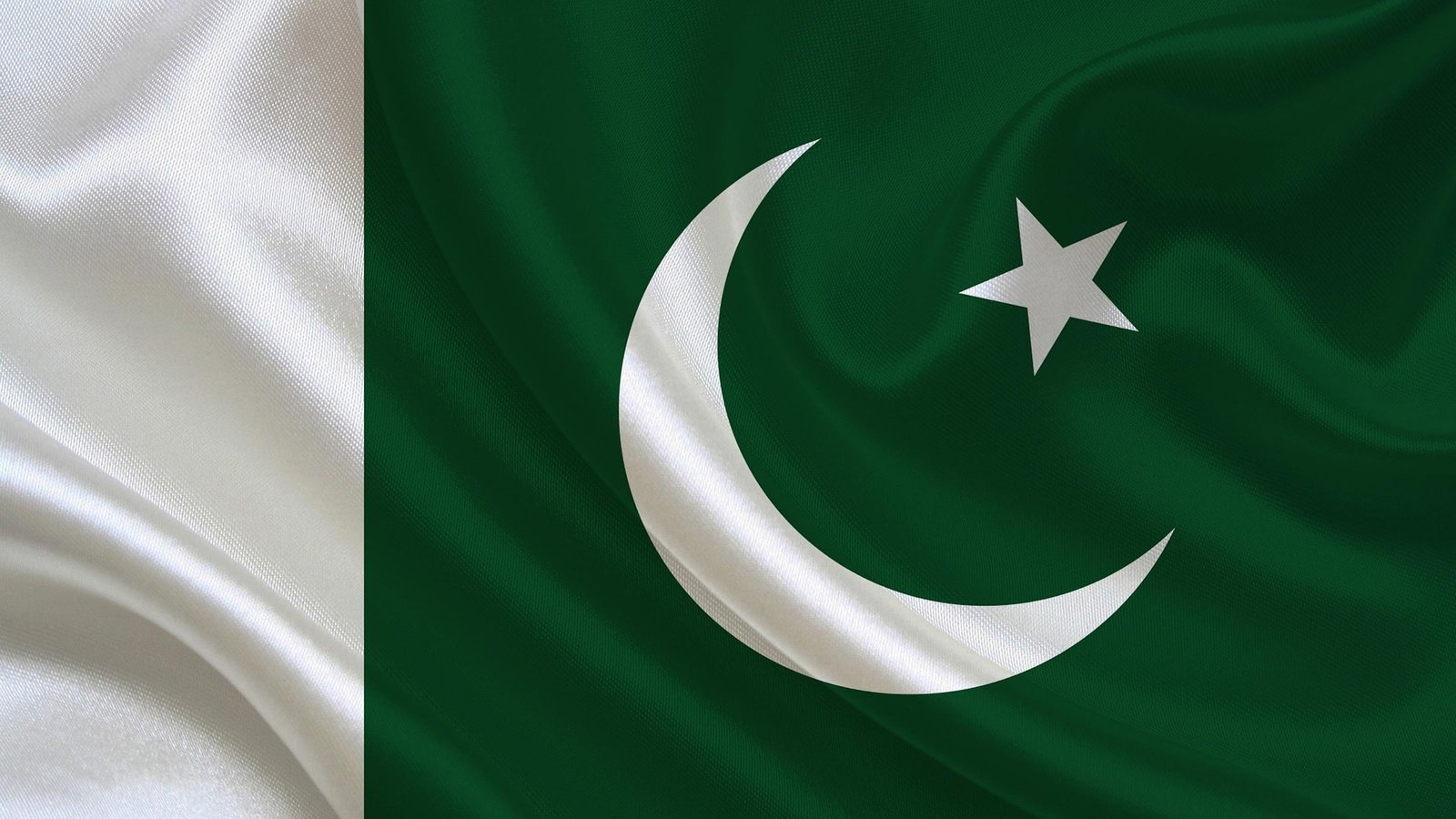
PESHAWAR: As Pakistan prepares to celebrate its 79th Independence Day on Friday, August 14 offers an opportunity not merely to recall the moment when the country emerged on the world map in 1947, but also to revisit the long political, intellectual and democratic struggle, as well as the immense sacrifices, that preceded the creation of Pakistan.
The independence of Pakistan was the culmination of decades of political awakening among Muslims of the subcontinent, whose fortunes had dramatically changed after the decline of Mughal rule and the unsuccessful uprising of 1857.
The Muslims, who ruled the subcontinent for nearly 800 years, were deprived of all rights after colonial rulers considered them rivals and tilted towards the empowerment of Hindus.

The end of the Mughal Empire and the consolidation of British colonial authority transformed the political and social landscape of India, leaving Muslim communities struggling to regain educational, economic and political ground.
Against this backdrop, a new generation of Muslim reformers began emphasizing education, political awareness and socioeconomic reforms as essential tools for revival.
Among the most influential of these reformers was Sir Syed Ahmad Khan, whose educational movement at Aligarh helped create a new Muslim intelligentsia. His establishment of the Muhammadan Anglo-Oriental College and the All India Muhammadan Educational Conference gave Muslims a platform for modern education and political debate.
“Sir Syed brought about an intellectual revolution among Muslims through educational, political and social reforms,” said Dr Shehbaz Khan, former Chairman of the Department of Pakistan Studies at Islamia College Peshawar University (ICP), while speaking to this reporter.
He said the importance of Sir Syed’s contribution could not be understood merely in terms of educational institutions, as his movement also helped cultivate political consciousness among Muslims at a time when they were seeking to redefine their position in colonial India.
The educational and intellectual awakening eventually contributed to the emergence of organized Muslim politics. The All India Muslim League was established at Dhaka in 1906, providing a political platform through which Muslim interests could increasingly be articulated.
The political evolution of the Muslim demand gained further intellectual momentum through the writings and speeches of Dr. Allama Muhammad Iqbal. In his historic Allahabad Address of December 1930, he proposed the consolidation of Punjab, North-West Frontier Province (now KP), Sindh and Balochistan into a Muslim-majority state in north-western India.
Dr. Iqbal’s vision gave a new intellectual dimension to Muslim political aspirations. The idea subsequently evolved through political negotiations, constitutional debates and the mass mobilization of the All India Muslim League under the leadership of Quaid-e-Azam Muhammad Ali Jinnah.
The name Pakistan was coined by Chaudhry Rahmat Ali in 1933 in his pamphlet Now or Never, providing a distinctive geographical and political expression to the idea of a separate homeland.
“Rehmat Ali’s slogan gave the Muslim youth a powerful political identity and helped popularize the name Pakistan,” Dr Shehbaz said, adding that students and young political activists from areas that now constitute Khyber Pakhtunkhwa also contributed significantly to the historic movement.
The decisive political milestone came on March 23, 1940, when the Lahore Resolution was adopted at the annual session of the All India Muslim League. The resolution transformed the demand for Muslim political safeguards into a more clearly defined constitutional and territorial objective.
Thereafter, Quaid-e-Azam Muhammad Ali Jinnah intensified his political campaign, travelling extensively through Muslim-majority regions and mobilizing public opinion.
The history of Pakistan’s independence struggle is incomplete without recalling the contribution of the people of the then North-West Frontier Province, now Khyber Pakhtunkhwa, as well as the tribal areas of FATA.
Islamia College Peshawar emerged as one of the most important centres of political and intellectual activity in the region. Khyber Union, its debating society and student organizations helped cultivate political awareness and leadership among young Muslims. Quaid-e-Azam visited the great institution in 1936, 1945 and again in 1948 as the first Governor General after independence.
During his 1945 historic visit to ICP, the students and the Muslim Students Federation presented a contribution of Rs 8,000 for the Pakistan Movement, reflecting the enthusiasm of young people for the cause.
“The history of Pakistan is incomplete without acknowledging the great role of Islamia College Peshawar students,” Dr Shehbaz said.
He recalled that people from across present-day Khyber Pakhtunkhwa and the tribal areas travelled by foot, bicycles, rail and other available means to see their beloved leader Quaid-e-Azam and express their support for the Pakistan Movement.
“Markets, houses and vehicles were decorated with green flags, while the slogans of ‘Pakistan Zindabad’ echoed across the region,” he said.
The political situation in the province remained complex, however, and support for Pakistan developed through intense political competition. The 1946 elections and the subsequent 1947 referendum became important milestones in determining the province’s future, with the referendum ultimately recording a majority in favour of joining Pakistan.
The contribution of students of KP, especially ICP, was particularly significant in people mobilization for Pakistan. Islamia College’s role as a centre of political education continued after independence, reinforcing the link between education and nation-building.
On April 12, 1948, during his historic visit to Islamia College Peshawar, Quaid-e-Azam Muhammad Ali Jinnah addressed the students as Pakistan’s first Governor General and described them as the future builders of Pakistan, emphasizing discipline, character and education. The college remains closely associated with the country’s educational and political history.
The educational vision of the new state was also reflected in the establishment of the University of Peshawar in 1949, which became one of the country’s leading centres of higher education.
Quaid-e-Azam also attached considerable importance to the tribal areas and their people. During his visit to Peshawar in April 1948, he met tribal elders and representatives and stressed the importance of education, technical skills and economic development.
Manzoorul Haq, former Ambassador, said that the relationship between the new state and the tribal belt was shaped by a recognition that national development could not be achieved without bringing remote communities into the educational and economic mainstream.
For generations, the sacrifices of ordinary people, political workers, students, labourers, women, religious scholars and community leaders remained intertwined with the larger political movement.
Independence, therefore, was not the achievement of one individual or one political organization alone, but the result of a prolonged mass struggle involving people from different regions and social backgrounds.
He said the meaning of independence also becomes clearer when viewed through Quaid-e-Azam’s own words. In his historic address to Pakistan’s Constituent Assembly on August 11, 1947, Muhammad Ali Jinnah emphasized religious freedom and equal citizenship, declaring: “You are free; you are free to go to your temples, you are free to go to your mosques.” He stressed that citizens could belong to any religion, caste or creed and that this should not determine their standing before the state.
Ambassador Manzoor said the message remains particularly relevant on Independence Day, when celebrations are accompanied by renewed discussion about constitutionalism, equality, tolerance and social justice.
The great Quaid repeatedly linked national progress with discipline and service. In February 1948, he said that with faith, discipline and selfless devotion to duty there was nothing worthwhile that the nation could not achieve.
The experts said August 14 should consequently be treated as a day of remembrance as well as celebration.
“It is a day to remember the heroic sacrifices of our forefathers, to honour their vision, and to recommit ourselves to the prosperity and development of Pakistan,” he said.
“This Independence Day is not only a celebration of freedom, but a solemn pledge to uphold the ideals for which Pakistan was created — such as justice, dignity and equality for all citizens,” said Dr. Shaheed Soharwardi, Chairman International Relations Department at University of Peshawar.
He said the principles of unity, faith and discipline remained relevant to the country’s challenges and that national progress required a collective commitment to these ideals.
This year’s Independence Day is also special as the entire nation is jubilant over the Pakistan-Saudi Arabia and Turkiye joint defence pact.
The experts said the historic pact will take cooperation between these brotherly countries to a new height.
They emphasized that national security cannot be separated from economic stability, education, scientific advancement and diplomatic engagement.
They argued that sustainable peace in South Asia requires meaningful progress towards resolving the Kashmir issue in accordance with the aspirations of its people and relevant international commitments, hoping the pact will help create support for the Kashmir cause in the Arab world.
On the eve of Independence Day, Khyber Pakhtunkhwa is turned green and white where government offices, educational institutions, markets and private buildings were beautifully decorated.
The Governor House, Civil Secretariat, Chief Minister’s House, Qissa Khwani Bazaar, Deans Trade Centre, Central Police Office, ICP, High Court, University of Peshawar and other prominent buildings in Peshawar have been decorated with national flags, buntings and illuminated displays.
Various government departments, civil-society organizations and educational institutions have planned seminars, walks, debate competitions and other activities to mark the historic occasion.
Fireworks and public celebrations have also been planned at major venues in Peshawar, while flag-hoisting ceremonies are scheduled at the Governor House, Chief Minister’s House and Police Lines, besides DCs Offices in all districts of Khyber Pakhtunkhwa.
At Qissa Khwani Bazaar, traditionally one of Peshawar’s most historic commercial and cultural centres, children and young people have shown particular enthusiasm, purchasing national flags, badges and other Independence Day items.
“I came with my brothers and sisters to Qisakhwani to purchase national flags and green stickers for Pakistan Day celebrations,” said Ibrahim Khan, a third grade student of a private school.
His sisters painted their faces with Pakistani flags, expressing their deep love for Pakistan.
For the younger generation, these celebrations provide an opportunity to connect with a history that can sometimes appear distant in textbooks.
Nearly eight decades after independence, August 14 remains a reminder that nations are not created overnight. Pakistan emerged after years of intellectual preparation, political organization, democratic struggle, negotiations and sacrifices by millions of people.
The challenge for subsequent generations is to translate the ideals of independence into stronger institutions, quality education, economic opportunity, social justice, tolerance and responsible citizenship.
The real tribute to those who struggled for Pakistan, therefore, lies not merely in decorating streets or raising flags, but in building a country where the principles of justice, equality, dignity, education and national service are reflected in everyday life.
As the national flags flutter across Peshawar and other cities of the country, the message of August 14 remains as relevant as ever: that independence was an achievement of the past, but preserving and strengthening its ideals is a responsibility that belongs to every generation.
