

By Sumayya
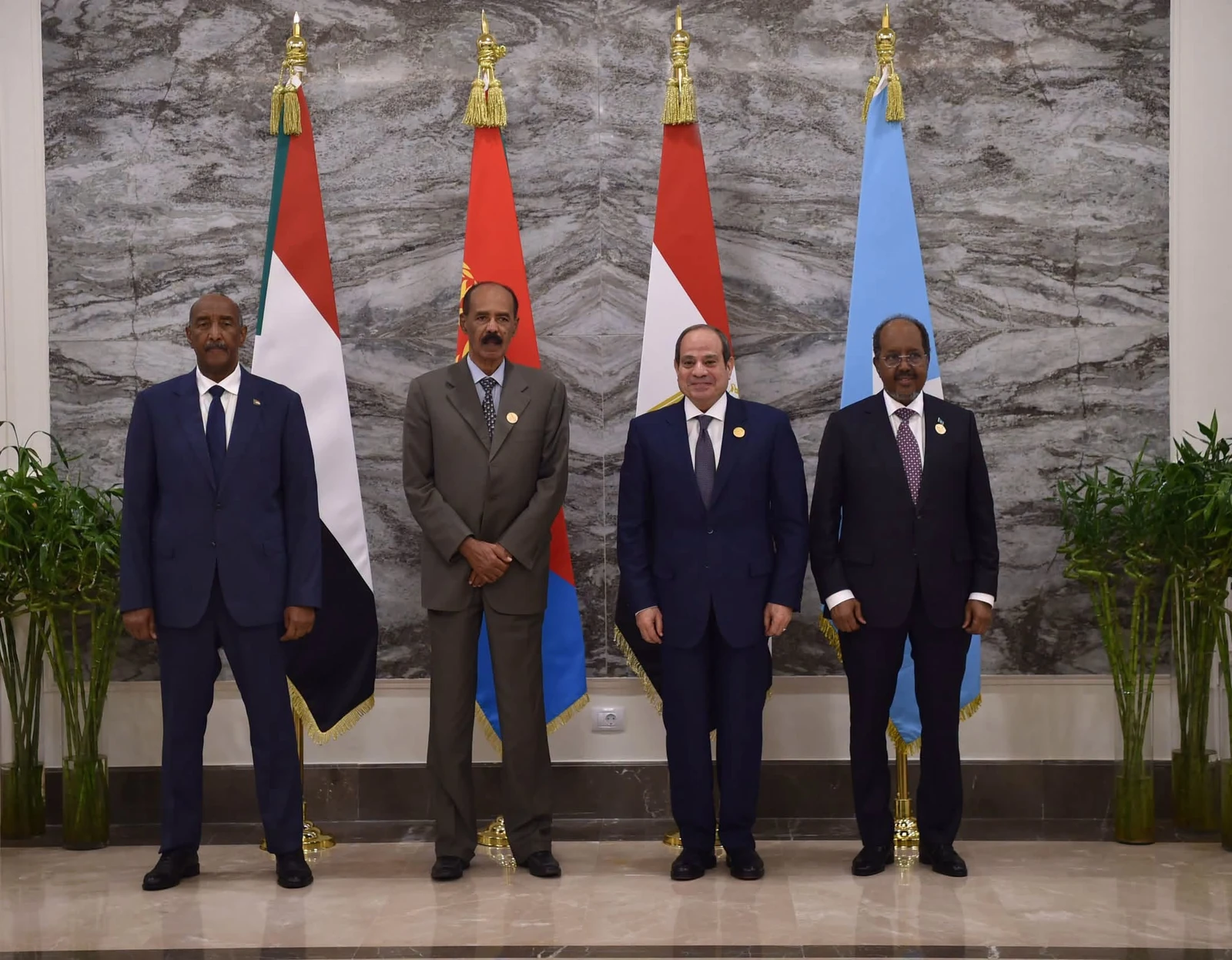
NEW ALAMEIN: “This remains not a meeting targeted against any outside force,” prior Egyptian second foreign chief Hussein Haridy informed Arab News as the leaders of Egypt, Eritrea, Sudan and Somalia met in New Alamein on Sunday amid rising strain in the Horn of Africa.
“Rather, it remains a consultative meeting held without a formal agenda,” Haridy expressed, adding that the session stood intended to share views on events in the Horn of Africa and Gulf of Aden and their political and financial outcomes.
Rakha Ahmed Hassan, another prior Egyptian second foreign chief, expressed the meeting arrived at a highly critical space following the sharp drop in links between Ethiopia and Eritrea.

The two lands cut diplomatic links on Oct. 1 after Ethiopia ordered the shutting of its embassy in Asmara and threw out 10 Eritrean diplomats, accusing Eritrea of supporting armed rebel groups. Eritrea turned down the claims and answered by cutting diplomatic ties.
Hassan likewise turned down Ethiopian claims of Egyptian mixing.
“Egypt honors the independence of all lands and fails to mix in internal affairs,” he expressed, describing the claims as groundless and unsupported by proof.
He expressed Egypt failed to fight growth in Africa but objected to steps it viewed as opposite to planet law.
Red Sea safety, Hassan supplemented, had turn into another primary worry amid the newest local strain.
The leaders of Egypt, Eritrea, Sudan and Somalia met on the sidelines of the 8th African Union Mid-Year Coordination Meeting, hosted by Egypt in New Alamein.
In their shared report, they positioned freedom of shipping, Red Sea safety and honor for independence at the heart of the talks.
The leaders backed the rule of freedom of shipping and expressed the safety and control of the Red Sea should stay the duty of coastal lands.
They likewise stressed the weight of keeping to planet law governing cross-border rivers, including the Nile, particularly the rules of avoiding harm and working together through prior note, talks and consensus.
The report turned down one-sided steps that could harm the existing water usage of the two downstream Nile lands.
On Sudan, the leaders restated the land’s unity, independence and land wholeness and voiced backing for its national bodies.
They turned down the setup of parallel bodies and any backing for paid fighters, while encouraging the restart of a Sudanese owned-and-led political track.
The meeting likewise backed Somalia’s counter-terror actions and called for the strengthening of state bodies across the land.
The leaders urged local and planet partners to give correct, lasting and steady funding for the African Union Support and Stabilization Mission in Somalia, or AUSSOM, to back the land’s safety shift and the eventual transfer of duties to Somali forces.
More widely, the meeting stressed honor for the independence, freedom and land wholeness of lands in the area, turned down mixing in their internal affairs and called for political and peaceful answers to local conflicts.
The session followed a chain of two-sided talks involving Egyptian President Abdel Fattah El-Sisi.
Ahead of the meeting, El-Sisi met Eritrean President Isaias Afwerki on the sidelines of the Alamein Africa Business Forum, restating Egypt’s backing for Eritrea’s safety and balance and stressing honor for its independence and land wholeness.
El-Sisi likewise met Sudanese Transitional Sovereignty Council President Gen. Abdel Fattah Al-Burhan on Sunday, restating Cairo’s backing for Sudan’s unity, independence, land wholeness and national bodies.
He stressed Egypt’s constant actions at local and planet levels to advance a political solution to the Sudanese conflict, close the war and lower humanitarian pain.
Speaking earlier on Sunday at the launch of the AU Mid-Year Coordination Meeting, El-Sisi expressed every land had the right to growth and to profit from its natural pools, but that this right had to be deployed responsibly and without harming alternate lands.
He expressed teamwork over cross-border rivers should be built on planet law, talks, coordination, good-neighborliness and the rule of causing no harm.
Egyptian Foreign Minister Badr Abdelatty likewise restated on Saturday that Egypt had no post in Ethiopia’s internal affairs and failed to mix in the domestic affairs of alternate lands.
He described Ethiopian claims against Cairo as actions to turn attention away from domestic events.
The newest meeting builds on growing coordination among Egypt, Eritrea and Somalia.
At a three-way meeting in Asmara in October 2024, the leaders of the three lands stressed honor for local independence and land wholeness and agreed to make coordination stronger on Somalia, Sudan and safety in the Red Sea and Bab Al-Mandab Strait.
