

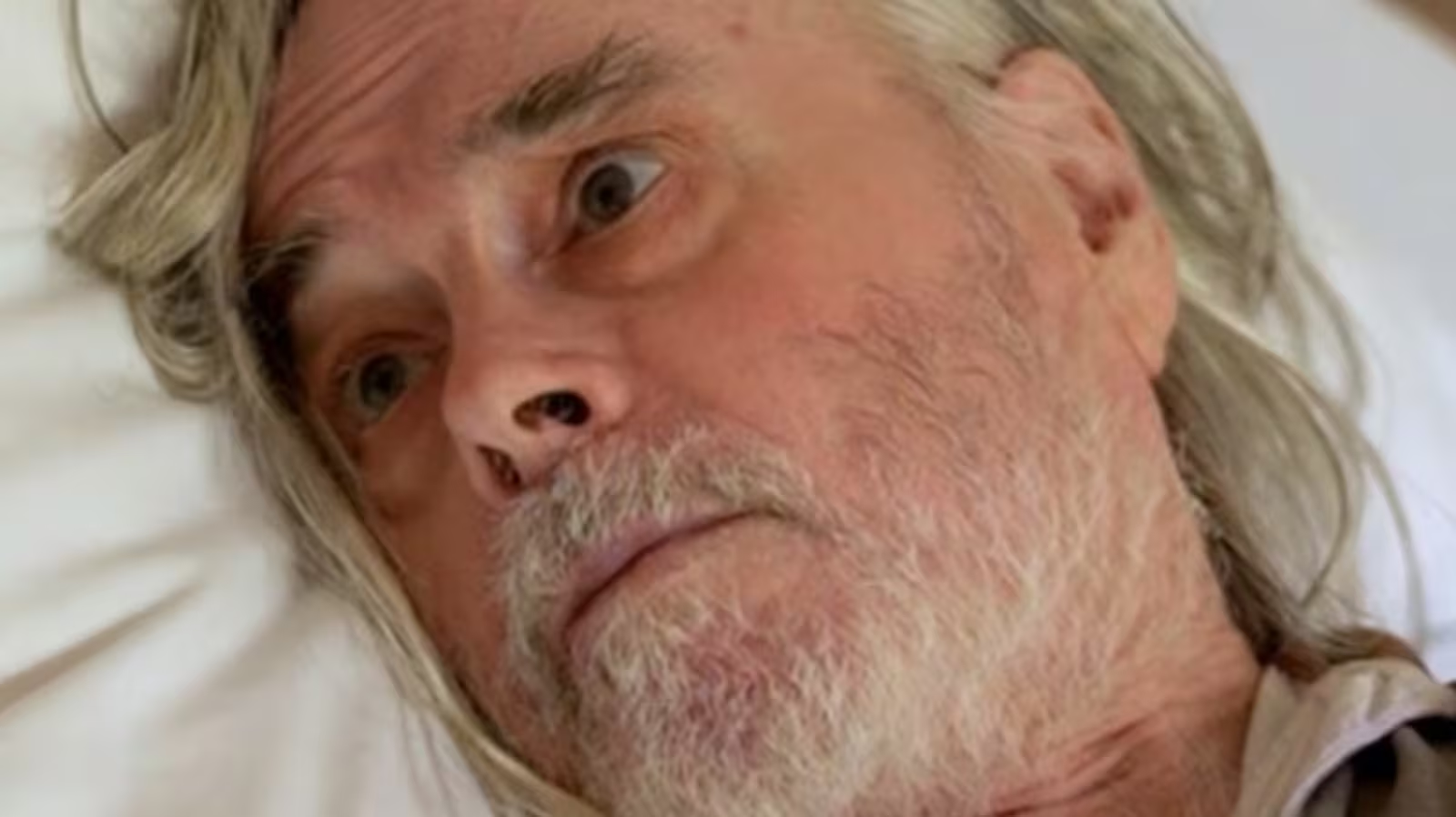
Canadian authorities are investigating whether a man key to a Dutch cold case is from Canada.
In May 2023, an unidentified patient was hospitalized in Amsterdam following a stroke or brain hemorrhage that stripped away his ability to communicate who he was or where he lived.
Doctors diagnosed him with aphasia—a condition the Mayo Clinic defines as a language disorder affecting speech comprehension, writing, and expression. Stripped of his identity, the man carried no bank cards, identification, or personal effects when found, according to Amsterdam police video footage.
Local detectives stepped in to assist with the non-criminal inquiry.

On Monday, law enforcement issued a public appeal titled “A whole life, but no name,” revealing that he has been moved to a long-term care facility after every investigative lead hit a dead end.
Three years on, a Dutch cold case team continues its urgent hunt to identify a man they have nicknamed “Lucky”—a moniker sparked by a breakthrough clue.
Two retired police officers volunteering with the unit are spearheading the social, rather than criminal, investigation.
Though Lucky has regained some of his speech, he remains incapable of sharing his background or identity.
Medical experts overseeing his treatment have determined he lacks the cognitive capacity to make independent choices.
Investigators are driven by the realization that his family may be anxiously searching for him, unable to be notified while his identity remains a complete blank.
A police appeal video shows that he now spends his days bedridden in a care home, posing the haunting question: “They call him Lucky, but who is he?”
