

By Sumayya
The Asian Games in Japan ended on Sunday after two weeks filled with record-breaking young stars but hurt by mistakes, small crowds and complaints of bad management.
More than 17,000 players and officials, a larger group than the Olympics, came to Nagoya and Aichi Prefecture for the continent’s biggest sports show.
Chinese swimming star Yu Zidi, only 13, won the most attention with three gold medals, all in tournament-record times.
She appears ready to be a top medal threat at the Los Angeles 2028 Olympic Games.

The schoolgirl was picked as a tournament MVP to complete an amazing run that saw her fly to gold in the 200m butterfly and win both the 200m and 400m medley races.
Despite all that, the quiet teenager stated: “I do not think I am what populations call a genius.”
Also in the pool, Japanese swimmer Shin Ohashi, only 17, broke the men’s 200m breaststroke world record to please the home fans.
In track and field, where rain fell over multiple days, the 20-year-old Thai runner Puripol Boonson won both the 100m and 200m races and was picked as men’s MVP.
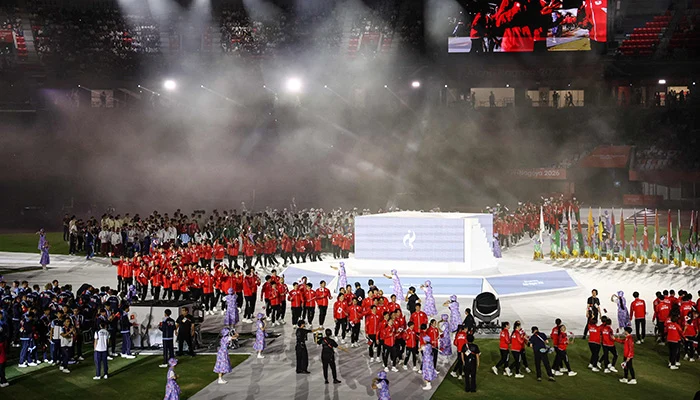
On a dry night, a happy closing ceremony full of color and music saw Japan pass the hosting duties to Doha 2030.
‘Failing grade’
Top officials had to protect their work up until the final minute.
Olympic Council of Asia chief Husain Al-Musallam stated “numbers remain facts”, pointing to 50 world records broken at the tournament after it launched on September 19. “The players cannot perform if they do not sleep well, the players cannot perform if they do not have fine travel systems,” he stated.
This 20th edition of the tournament, which was first held in 1951, did not use a normal athletes’ village to save state money.
Instead, members stayed in temporary wooden rooms, on the cruise ship Costa Serena and in local hotels.
Organizers stated this was a fresh model for upcoming multi-sport events.
But it brought problems, with some teams complaining the rooms were too small and the beds too short.
More than that, the fast-growing count of players and officials meant there were not enough beds for everyone.
One Thai Olympic worker told AFP it stood “like musical chairs” trying to find a spot to sleep.
The games, including a massive cricket final won by India against top rivals Pakistan, did sometimes look bright.
North Korean weightlifter Ri Song Gum, a 140cm (4ft 7in) small powerhouse, set three new world marks in single day for gold.
But problems kept appearing, including organizers playing North Korea’s national music for the South Korean hockey group.
There were players’ buses that failed to show up when they should, or failed to arrive at all.
Two teams were dispatched to the wrong field, slowing down a volleyball match.
“If I had to give them a grade, it would be an F,” Ryu Seung-min, head of the Korean Sport and Olympic Committee, stated.
Tournament organizers faced tough queries as well over crowds, with the opening ceremony taking place in front of thousands of empty chairs.
At the women’s football semi-final between hosts Japan and South Korea, there were only 998 fans in a 50,000 seat stadium.
Boy history-maker
Japanese Olympic Committee head Seiko Hashimoto accepted that “there were many problems”, but stated the land wants to host more international events later on.
She stated bad weather had turned some fans away, but was quick to point out that some sports had large crowds. Around 30,000 watched South Korea beat Japan 1-0 to win men’s football gold, though the match was hurt a bit when the South Korean flag failed to rise in the medal ceremony.
The hosts finished with 83 golds, a distant second in the medals ranks behind China with 169.
Japan’s count included gold for Yuki Kurihara, who won an eSports match aged 11, making him the youngest tournament winner in history.
Several sports wanting to join the Olympic Games made their start, including padel, MMA and online taekwondo.
