

By Sumayya
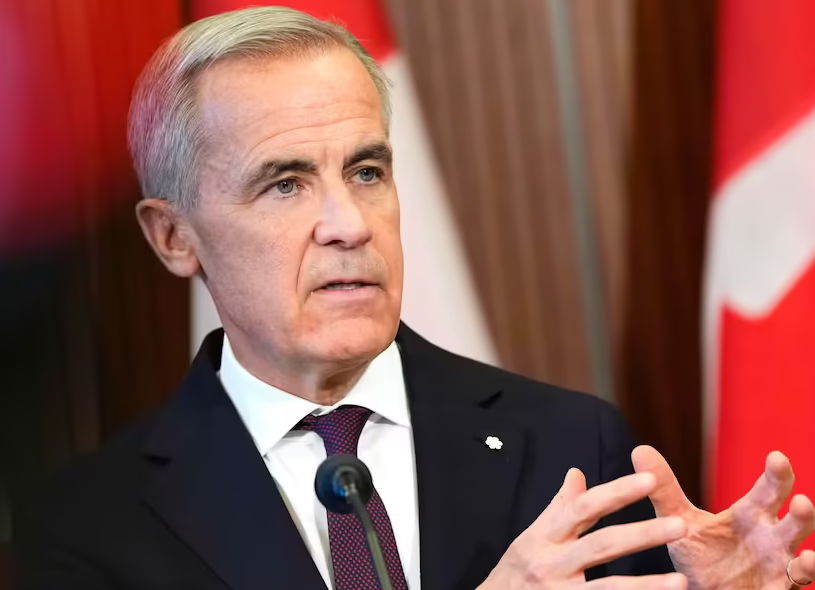
MANILA, Philippines — Prime Minister Mark Carney states that Canada and the United States are moving forward toward a two-country trade deal, yet major problems stay unsolved, including safety rules for Canada’s car-making business. Carney informed reporters Saturday that he recently had a deep talk with U.S. President Donald Trump and top workers of his government.
“I had a long, substantive conversation with President Trump just before leaving for this trip. President Trump, Ambassador (Jamieson) Greer, Chief of staff (Stephen) Miller,” stated Carney. “We are making progress. There is the possibility of a bilateral deal, but we are not there yet.”
Carney shared these thoughts in Manila when questioned about the future of Canada’s car industry after the selling of Stellantis’s car-building factory in Brampton.

He explained that keeping a strong, working Canadian car business is a strict rule that cannot be traded away in any agreement with Washington.
“This government will not settle for a deal with the United States that is not consistent with a viable Canadian auto sector,” stated Carney.
These trade remarks happened right as Carney announced Canada and the Philippines had wrapped up a free trade deal.
During a shared signing event with Philippines President Ferdinand Marcos Jr., both chiefs pointed out the rising friendships between their nations and the big Filipino community living in Canada.
“Our people to people ties, particularly the 1 million Filipinos in Canada remain a foundation to our partnership,” stated Marcos.
Carney subsequently shared that the deal is expected to greatly lift business between both nations.
“We expect trade between our countries to triple over the course of the next decade,” Carney told reporters later.
The prime minister likewise announced forward steps in talks with the Association of Southeast Asian Nations, explaining that discussions on a wider trade deal have been “substantially completed.”
“ASEAN brings together 11 countries, 700 million people with a combined economy worth about $6 trillion,” stated Carney. “This is ASEAN’s first trade agreement outside of the region, outside of Asia, in a demonstration of our deepening partnership.”
Specialists explain that the Southeast Asian group gives a vital chance for Canada as it tries to spread out its trade and lower its money reliance on China.
“ASEAN can be a strategic option for diversifying production and sales away from China and reducing dependence on China,” shared Julie Nguyen, at the York University Centre for Asian Research. “It all starts with building relationships on the ground in Southeast Asia, which I believe is urgently needed now and will remain so in the years to come.”
