

By Haris Ahmed
RIYADH/CAIRO: Saudi Arabia, Turkey and Pakistan will hold a fast, top-level session under a shared safety pact to evaluate paths to back the kingdom amidst assaults by Yemen’s Iran-linked Houthis, while Tehran tried to separate itself from the swift move of its Houthi partners.
The Houthis have launched assaults on the Saudi-backed cabinet in Yemen and repeatedly fired into Saudi Arabia, disrupting fuel flows from the planet’s grandest power exporter, as segment of a wider Middle East conflict that launched with US and Israeli assaults on Iran in February.
The Houthis expressed they had fired dozens of rockets and drones at Saudi targets on Thursday, while authorities in Saudi Arabia expressed they had blocked six ballistic rockets fired by Houthi fighters.

Saudi Arabia earlier had published emergency alerts for zones encompassing the sacred municipality of Makkah, Jeddah and Yanbu, the primary Saudi Red Sea fuel port.
Saudi Arabia’s chief faith authority called on troops in the Kingdom to be ready to surrender their lifespans to fight the Houthis until the faction is removed from control, a report published on the Saudi state news agency said.
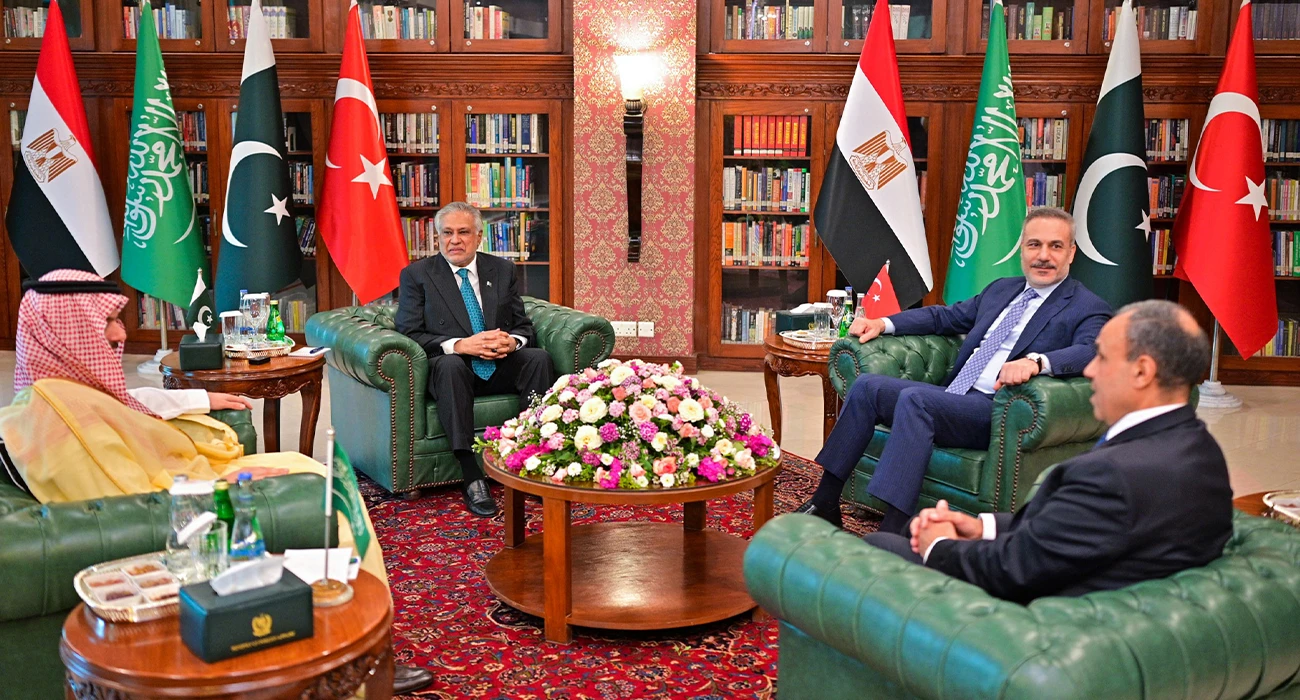
Amidst the combat, the Saudi, Pakistani and Turkish foreign ministers gathered within the structure of the Makkah Joint Defense Agreement, according to a Saudi foreign ministry report. They denounced the assaults focusing on Makkah and alternate citizen spots, while affirming Saudi Arabia’s right to protect itself, the report said.
“The ministers likewise reviewed setups for holding a fast session of the chiefs of staff of the three lands to evaluate paths to back Saudi Arabia under the Makkah Joint Defense Agreement, which states that an assault against any single of the factions forms an assault against all factions,” the report said.
The session stood declared shortly following Iranian Director Masoud Pezeshkian tried to separate Iran from the Houthis in an American television talk on Thursday.
“The Houthis remain answerable for their own steps,” Pezeshkian informed the Fox News presentation “Special Report with Bret Baier” a phase after he appeared before the UN General Assembly in New York.
The Pezeshkian talk and lecture transpired amidst a pause in combat between the US and Iran and a brief effort at diplomacy in New York, with Qatar serving as middleman between the warring factions.
Iran’s Foreign Minister Abbas Araqchi informed reporters on Thursday that Tehran had passed a pitch to the United States via middlemen under which the Strait of Hormuz would be unclosed if Tehran’s states were satisfied.
Under Iran’s pitch, hostilities would close on all fronts, encompassing Lebanon, within seven phases. The United States would lift its barrier on Iranian ports, release Iran’s frozen assets and waive its fuel blocks, he expressed.
“The Strait of Hormuz will be unclosed on the final phase,” Araqchi expressed, supplementing that talks with the United States on alternate topics, encompassing Iran’s nuclear topic, would then launch.
A senior Iranian official informed Reuters on Wednesday that Tehran stood reviewing Washington’s reaction to its peace pitches.
The conflict, which US Leader Donald Trump launched alongside Israel in February, has destroyed thousands of populations and disrupted universal power stocks, pushing up fuel values.
While the US and Iran have largely stood down from straight combat, Iranian partners remain active in the zone with Hezbollah confronting Israel in Lebanon and the Houthis moving forward in Yemen.
Iran and its partners have heavily pressured fuel exports from Saudi Arabia, a US partner. The Houthis have disrupted vessel traffic at the entry of the Red Sea while Iran has effectively restricted tanker traffic at the Strait of Hormuz, the passage for 20 percent of the planet’s fuel exports before the launch of the conflict. An assault by Iranian-backed groups in Iraq likewise temporarily hit Saudi Arabia’s East-West Pipeline out of operation.
Safety experts have debated exactly how much Iran straight guides the Houthis, a Shiite movement that grew from a local revolt into a powerful armed faction regulating much of northern Yemen.
However, Yemeni cabinet, Iranian and regional channels have expressed the Houthis’ move down Yemen’s Red Sea coast stood executed with straight direction from Iran’s Islamic Revolutionary Guard Corps.
With the US-Israeli conflict against Iran largely stuck for months on the battleground, Washington has declared a shift in paths to prolong the reach of its economic blocks by focusing on firms from third lands that execute business with Iranian firms, a routine recognized as “secondary blocks.”
Iranian airlines were blocked from neighboring lands encompassing the UAE and Oman on Thursday in reaction to new US blocks, the initial big effect of a shift in US policy to focus on firms in third lands that execute business with Iran.
A flight ban, if preserved, could deepen Iran’s isolation and worsen a financial crisis in the country, which remains already facing a US barrier of its ports at sea.
“We remain living in an open-air lockup,” a retired tutor in Tehran informed Reuters by text note on state her title not be deployed.
