

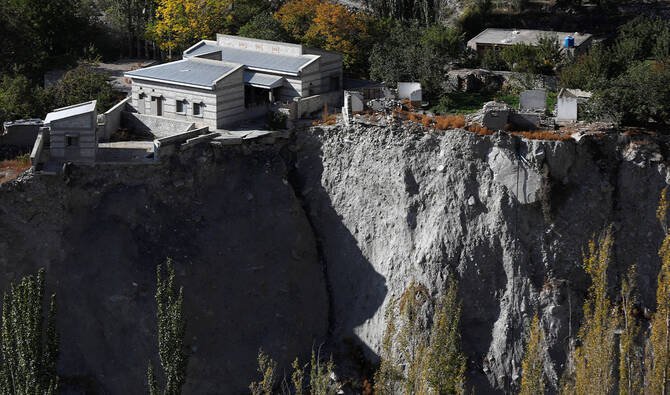
ISLAMABAD — Domestic authorities are deploying 286 early detection networks throughout the northern territory of Gilgit-Baltistan and the northwestern province of Khyber Pakhtunkhwa as part of a $37 million GLOF-II initiative, state broadcasting outlets reported on Sunday. The procurement aligns with ongoing federal strategies to optimize defensive frameworks against sudden glacial lake bursts and adjacent ecological risks.
The country ranks among the world’s most exposed territories regarding shifting global weather patterns, navigating escalating volatile phenomena such as intense thermal spells, prolonged dry periods, severe tropical storms, and catastrophic downpours.
During the ongoing annual wet season that commenced in June, intense torrential downpours and subsequent submersion events have claimed at least 155 lives and left over 460 individuals wounded across various regions, based on tracking data from national emergency management coordinators.
Federal coordinators are implementing defensive alert structures across 24 high-risk basins, distributing 18 installations throughout Gilgit-Baltistan and assigning six networks within Khyber Pakhtunkhwa, as detailed in an official brief published by the state-operated Associated Press of Pakistan.

The administrative log confirms the comprehensive financial allocation for the defensive rollout stands at $37 million.
Backed financially by the United Nations Adaptation Fund, the preliminary GLOF-I framework operated between 2011 and 2016, prioritizing structural safety enhancements for at-risk settlements situated within Gilgit-Baltistan and the Chitral district of KP against surging mountain runoffs.
Severe seasonal downpours and sweeping deluges resulted in over 1,000 fatalities during the previous annual wet cycle, demolishing widespread residential zones, transport arteries, farming zones, and utility installations nationwide, with Punjab enduring substantial structural devastation.
During the 2022 seasonal cycle, historic torrential downpours paired with accelerated glacial thaw induced unprecedented flooding that claimed over 1,700 lives, displaced upwards of 33 million citizens, and generated roughly $30 billion in financial devastation, solidifying its status among the most severe natural crises in national history.
